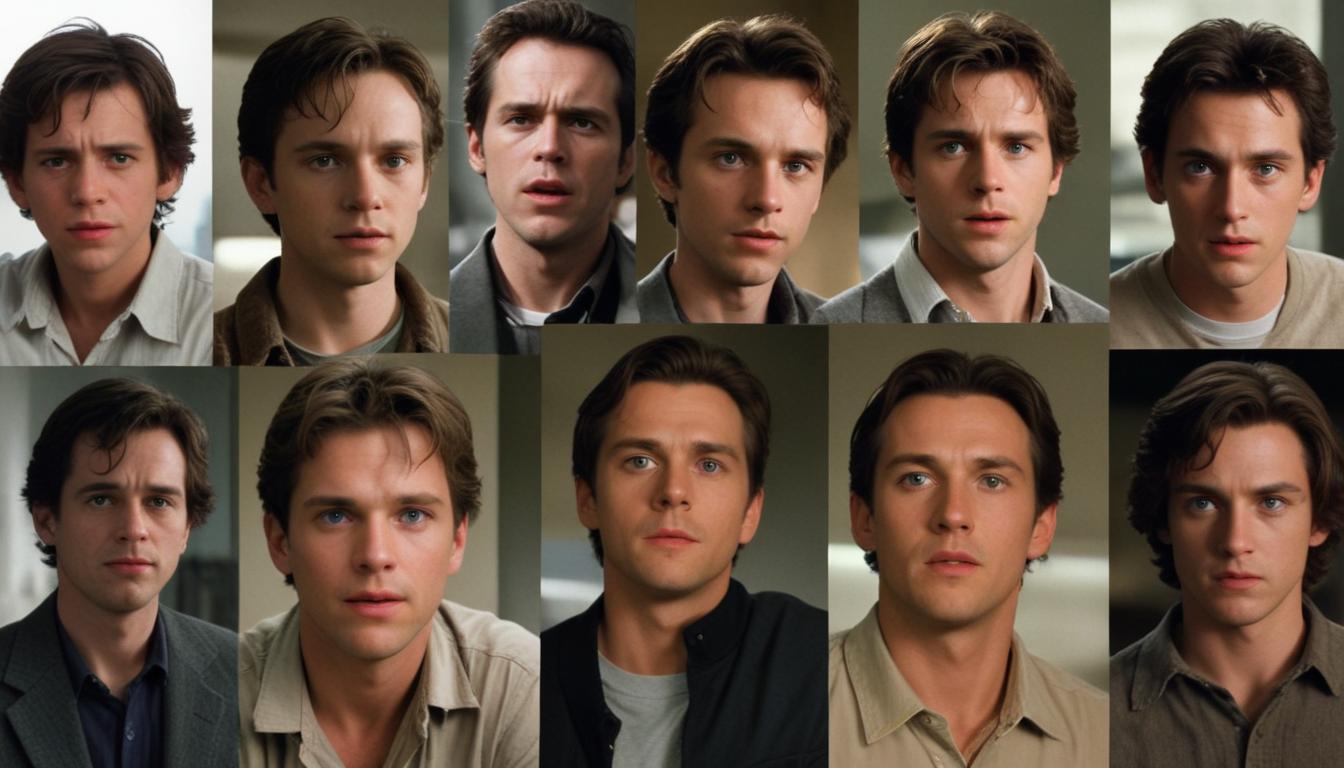
- memorable debuts
- career-defining roles
- standout performances by newcomers
- actors who stole the spotlight
- lasting impact on Hollywood
When it comes to some of the best acting in cinematic history, nothing quite compares to a memorable debut. For many actors, their first major role sets the stage for a lifetime of success, and for audiences, it’s a chance to witness the birth of a star. Consider Edward Norton in *Primal Fear*, a performance that not only earned him an Academy Award nomination but also announced his arrival in Hollywood as a serious actor to watch. His nuanced portrayal of a troubled altar boy shocked audiences and critics alike, solidifying this breakout role as one of the most unforgettable in modern cinema.
Another remarkable debut that deserves recognition is Jennifer Hudson in *Dreamgirls*. Transitioning from the world of music to film can be a risky move, but Hudson’s portrayal of Effie White was nothing short of electric. With her powerhouse vocals and emotionally raw acting, she walked away with an Oscar for Best Supporting Actress, cementing her role as a multi-faceted talent capable of conquering any medium. It’s impossible to discuss star-making roles without mentioning her captivating work in this film.
Then there’s Timothée Chalamet in *Call Me by Your Name*. While not his first-ever role, this debut in a leading part gave him the chance to showcase his impressive range and maturity well beyond his years. The tenderness and passion he brought to Elio captured the hearts of audiences everywhere and led to his first Oscar nomination at only 22 years old. Chalamet’s performance highlights not just the excitement of discovering a young star but also his potential to define the next generation of great actors.
These performances, and many others like them, remind us why first impressions truly matter in Hollywood. A single standout role has the power to launch careers, and these actors didn’t just make an impression—they redefined what it means to deliver an unforgettable debut. The artistry and dedication they brought to their roles set the tone for their careers, ensuring their legacies would endure for years to come.
career-defining roles
Some performances do more than elevate a film—they define an actor’s career, catapulting them to new heights and becoming synonymous with their very identity on screen. Take Daniel Day-Lewis in *There Will Be Blood*, for instance. His portrayal of Daniel Plainview is widely regarded as one of the best acting achievements in cinematic history. With a commanding presence and unparalleled depth, Day-Lewis brought a complex, morally ambiguous oilman to life, earning him the second of his three Academy Awards. More than just a role, it became the benchmark for his legendary career, cementing his reputation as one of the most transformative actors of all time.
Another career-defining role comes from Charlize Theron in *Monster*. Known predominantly for her looks in her early career, Theron completely changed the narrative with her role as serial killer Aileen Wuornos. She underwent a shocking physical transformation and delivered a raw, unflinching performance that not only won her an Oscar for Best Actress but also redefined how audiences and critics saw her abilities. The role shattered any preconceived notions about her being just a glamorous Hollywood star and showcased her as a fearless performer willing to push beyond limits.
For Leonardo DiCaprio, that pivotal performance came in *The Wolf of Wall Street*. While already a household name, DiCaprio’s turn as the debaucherous and larger-than-life Jordan Belfort presented a career highlight that fully harnessed his charm, versatility, and comedic timing. This role demonstrated his ability to command the screen with relentless energy, delivering a masterclass in excess and moral ambiguity. It stands as one of the defining moments of his long and consistently impressive body of work.
It’s impossible to forget Meryl Streep’s acclaimed performance in *Sophie’s Choice*. Her portrayal of a Holocaust survivor grappling with devastating memories showcased some of the best acting ever captured on film. Streep’s ability to convey heartbreak, resilience, and an undercurrent of fragility cemented her as the most formidable talent of her era, a status that remains untouched today. With this role, she didn’t just meet the high expectations set for her—she exceeded them with a performance that is still studied by aspiring actors worldwide.
These iconic portrayals remind us that star-making roles are often about far more than critical acclaim or box office success. They’re the performances that become inseparable from an actor’s legacy—the ones that audiences return to over and over again. Whether through transformative physicality, emotional vulnerability, or sheer magnetism, these career-defining roles are the performance highlights that continue to resonate, long after the credits roll.
standout performances by newcomers
When it comes to standout performances by newcomers, it’s not just about holding your own on screen—it’s about capturing lightning in a bottle. These roles don’t merely introduce young talents to audiences; they serve as star-making milestones that showcase raw potential, emotional depth, and thrilling on-screen charisma. One unforgettable example is Hailee Steinfeld in *True Grit*. At just 13 years old, Steinfeld delivered one of the best acting performances of the decade, holding her ground alongside industry heavyweights like Jeff Bridges and Matt Damon. Her portrayal of Mattie Ross, a determined teenager seeking justice for her father’s murder, was fearless, intelligent, and full of nuance, earning her an Academy Award nomination and proving she was a force to be reckoned with.
In a more contemporary example, Florence Pugh stunned audiences with her breakout role in *Lady Macbeth*. As Katherine, a young woman trapped in a cruel and stifling marriage, Pugh commanded the screen with her simmering rage and manipulative charm. Critics were quick to highlight her performance as a revelation—she wasn’t just playing the role; she fully embodied it. This chilling, layered portrayal marked her as one of the most compelling newcomers of her generation, setting the stage for an impressive rise in Hollywood.
Another striking debut performance came from Lupita Nyong’o in *12 Years a Slave*. With a role as harrowing as Patsey—a slave enduring unimaginable suffering—Nyong’o brought staggering vulnerability and strength to the screen. Her unflinching performance earned her an Academy Award for Best Supporting Actress, an incredible accomplishment for a newcomer to the industry. Her work remains one of the performance highlights of the film and introduced a talent whose emotional depth and on-screen intensity continue to dominate Hollywood.
Similarly, Barkhad Abdi’s performance in *Captain Phillips* is the epitome of how a newcomer can steal the spotlight. Opposite Tom Hanks, Abdi delivered a chilling and unforgettable turn as Somali pirate leader Muse. With a balance of menace and humanity, Abdi turned what could have been a one-dimensional antagonist into a complex, relatable character. His raw and magnetic performance earned him an Oscar nomination, proving that extraordinary talent can emerge from unexpected places.
These standout performances remind us why fresh faces in Hollywood are essential. Each of these newcomers contributed not just to the films they were a part of but to the cultural zeitgeist, offering performances that stood as more than worthy of recognition. They didn’t just arrive—they dominated, demonstrating how star-making roles aren’t dependent on experience, but on skill, courage, and the ability to craft unforgettable moments that resonate with audiences long after the credits roll.
actors who stole the spotlight
Sometimes, it’s not the lead actor or the most seasoned performer who ends up walking away with all the attention—it’s the actor who unexpectedly steals the spotlight and leaves an indelible mark on the audience. These performances are often some of the most talked-about moments in film history, showcasing immense talent and unforgettable screen presence. Take Heath Ledger in *The Dark Knight*, for example. Although Christian Bale was the titular character, it was Ledger’s chilling, anarchic portrayal of the Joker that became the film’s defining element. Transforming into the iconic villain with unsettling intensity, Ledger delivered one of the best acting performances ever seen in a superhero movie, earning a posthumous Academy Award and elevating not just the role but the genre itself.
Similarly, Anne Hathaway commanded the audience’s attention in *Les Misérables*. As Fantine, her heartbreaking rendition of “I Dreamed a Dream” was more than just a standout moment—it was a masterclass in raw emotional delivery. On screen for only a fraction of the movie’s runtime, Hathaway’s performance was so impactful that it earned her an Oscar for Best Supporting Actress, making her the emotional core of the film. Her ability to dominate such little screen time with vulnerability and power epitomizes what it means to steal the spotlight.
Then there’s Christoph Waltz in *Inglourious Basterds*. As Colonel Hans Landa, Waltz turned what could have been just another villainous role into a magnetic and deeply layered portrayal of charm mixed with menace. Every line of dialogue, every facial expression was meticulously crafted, and Waltz’s frighteningly controlled intensity elevated the film as a whole. He didn’t merely contribute to Quentin Tarantino’s historical epic—he became its most memorable character, winning the Best Supporting Actor Oscar for his unforgettable work.
Lupita Nyong’o in *Black Panther* is another shining example. As Nakia, Nyong’o wasn’t the central protagonist, yet her portrayal of a fiercely intelligent spy with a moral compass left a lasting impression on audiences. Her performance brought emotional depth and composure to a cast already teeming with talent, proving her continued dominance as a powerhouse performer. Even amidst dazzling action scenes and a star-studded cast, Nyong’o’s ability to balance strength and vulnerability stood out, reminding viewers why she remains one of Hollywood’s most revered talents.
Finally, consider Joe Pesci in *Goodfellas*. Playing Tommy DeVito, a brash yet deeply dangerous mobster, Pesci didn’t just hold his own alongside Robert De Niro and Ray Liotta—he utterly dominated every scene he appeared in. His explosive energy and unpredictable nature made for some of the film’s most unforgettable moments, including the infamous “Funny how?” scene that has since become a pop culture staple. Pesci’s performance highlights the magic of taking supporting roles and turning them into star-making moments, as he walked away with an Oscar for his unforgettable turn.
Whether through sheer charisma, emotional vulnerability, or transformative power, these actors didn’t just play their parts—they redefined them, creating unforgettable performance highlights that linger in viewers’ minds. These examples prove that stealing the spotlight is not just about screen time; it’s about commanding the audience’s attention with craftsmanship and heart. Moments like these are what make cinema so impactful, reminding us of the magic that incredible performances bring to the big screen.
lasting impact on Hollywood
Some movie performances don’t just make waves for the moment—they create ripples that extend far into Hollywood’s future, influencing the industry and those who follow in their footsteps. These roles aren’t just memorable; they represent cultural shifts, artistic breakthroughs, and milestones that impact both the craft of acting and the broader landscape of cinema. For an actor, a role with this kind of power becomes one of the ultimate performance highlights of their career, setting benchmarks in storytelling that redefine what’s possible on screen.
One prime example is Marlon Brando in *A Streetcar Named Desire*. His portrayal of Stanley Kowalski was a groundbreaking moment for screen acting, marking the rise of Method Acting in mainstream Hollywood. Brando’s raw, visceral performance rewrote the rules of realism in cinema and inspired countless actors and directors to seek more authentic, emotionally rich portrayals. His work in this film blurred the lines between actor and character, cementing him as one of the greatest pioneers of his craft. The influence of this role reaches beyond its time, as it remains a gold standard for anyone striving to bring unfiltered humanity to their work.
Similarly, Sidney Poitier’s role in *Guess Who’s Coming to Dinner* left a lasting impact not only on Hollywood but also on society at large. By portraying Dr. John Prentice, a Black man engaged to a white woman during the height of the civil rights movement, Poitier brought grace, strength, and dignity to a conversation many found uncomfortable. His presence in the film was more than acting—it was a statement about progress, equality, and the evolving perception of race in America. This star-making role helped open doors for future actors of color, proving that Hollywood could engage meaningfully with social change while delivering compelling narratives.
Another performance that still resonates today is Jodie Foster in *The Silence of the Lambs*. As Clarice Starling, Foster didn’t just play a strong, intelligent heroine; she redefined what female roles in thrillers could look like. Her presence in the film was unwaveringly human—assertive, vulnerable, and deeply relatable. The success of her Oscar-winning performance challenged Hollywood’s male-dominated narratives and paved the way for more layered and complex female characters in genres previously dominated by men. Foster’s work remains one of the best acting achievements in psychological thrillers, with the character of Clarice serving as a blueprint for strong female leads ever since.
Another standout is Heath Ledger’s turn as the Joker in *The Dark Knight*. Beyond elevating a single performance to legendary status, Ledger’s anarchic yet deeply considered portrayal revolutionized perceptions of comic book adaptations. His deeply unsettling and immersive take on the iconic villain showed the potential for superhero films to deliver genuinely mature, Oscar-worthy performances. It laid the groundwork for future films in the genre, inspiring filmmakers and actors alike to bring depth and gravitas to roles that were previously dismissed as mere popcorn entertainment. Ledger’s performance was more than just a career-defining role; it redefined an entire genre.
Lastly, consider the profound influence of Lupita Nyong’o in *12 Years a Slave*. Her portrayal of Patsey not only served as one of the performance highlights of the decade but also shone a spotlight on untold stories of slavery with the kind of unflinching vulnerability that only a truly fearless actor could deliver. Nyong’o’s emotionally devastating debut garnered her an Academy Award for Best Supporting Actress and positioned her as a beacon for representing the stories of marginalized voices in cinema. That star-making role continues to inspire filmmakers to approach historical narratives with depth and nuance, proving that art can serve both as a mirror to the past and a guide for the future.
These performances are more than just moments in film history—they’re cultural touchstones that shift paradigms and inspire generations of creators. By pushing boundaries and redefining expectations, these roles show us the power of cinema not just to entertain, but to challenge, to change, and to endure over time. Whether reshaping genres, sparking societal conversations, or introducing new techniques to the craft of acting, these iconic turns demonstrate that the best acting can leave a legacy that lasts far beyond its moment on the silver screen.
