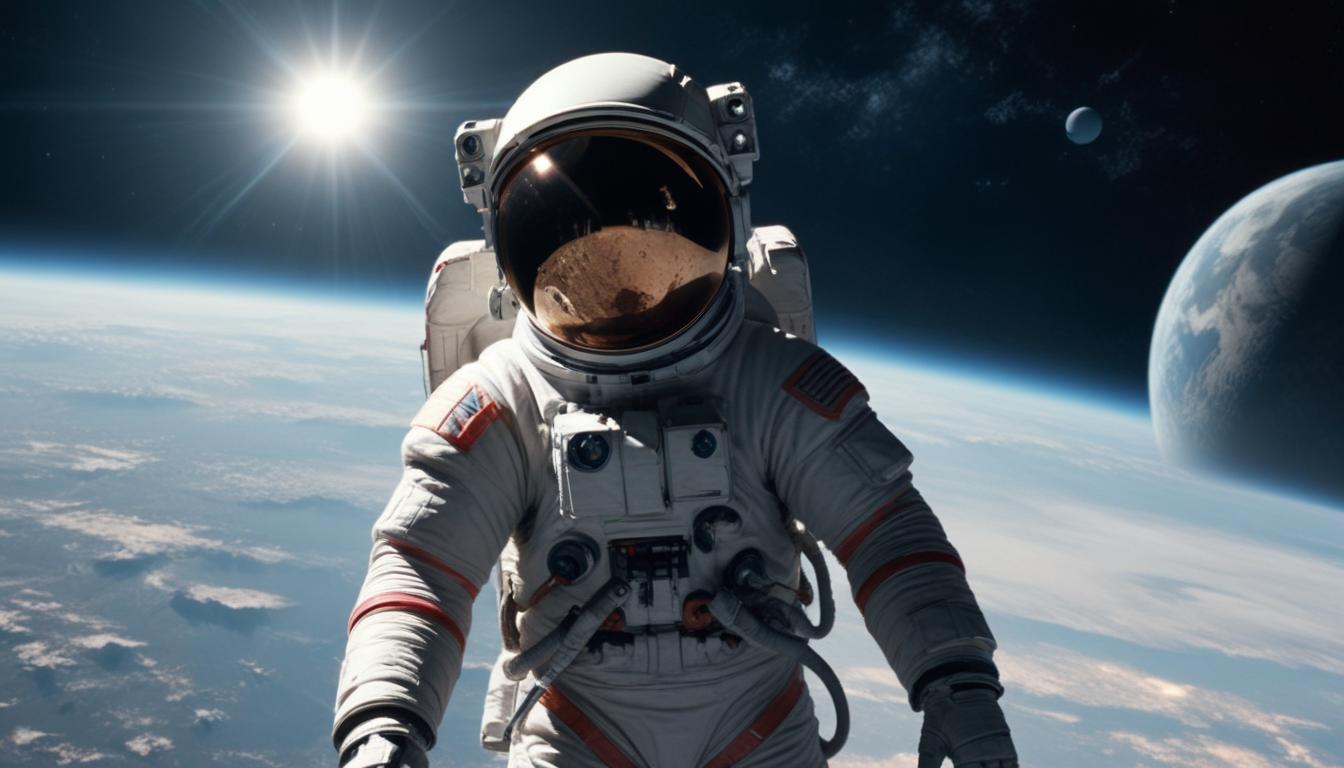
- iconic classics redefining space
- exploring new frontiers in storytelling
- gripping tales of survival and isolation
- epic battles and cosmic adventures
- imaginative visions of the unknown
Some movies transcend time, becoming touchstones of Interstellar Cinema for their ability to completely reimagine not only the concept of space but also humanity‘s place within it. These iconic classics have not only defined what audiences expect from Space Films but also sparked decades of cultural conversation. One perfect example is Stanley Kubrick’s groundbreaking epic, 2001: A Space Odyssey. Released in 1968, the film set a gold standard for cinematic storytelling in outer space with its stunning visuals, philosophical undertones, and pioneering use of special effects. From its haunting depiction of artificial intelligence in HAL 9000 to the enigmatic Star Gate sequence, Kubrick’s masterpiece continues to be revered as a landmark in the genre.
Ridley Scott’s Alien (1979) is another unforgettable entry that reshaped how space and science fiction could be approached in cinema. Its haunting atmosphere, coupled with a mix of terror and isolation aboard the Nostromo, brought together Sci-Fi Adventures and horror in a way no film had done before. The film’s tightly constructed narrative and unforgettable creature designs, courtesy of H.R. Giger, remain emblematic of what can be achieved when blending genres within the setting of cold, uncharted expanses of space.
Meanwhile, George Lucas’ Star Wars: Episode IV – A New Hope (1977) added swashbuckling action and fairy-tale heroism to the sphere of cinematic space exploration. It catapulted science fiction into mainstream popularity and established a sprawling universe that influenced countless filmmakers. Its unique mix of epic battles, relatable characters, and a galaxy teeming with life redefined space as a backdrop ripe with possibility, serving as the foundation for an unprecedented cultural phenomenon.
Finally, Andrei Tarkovsky’s Solaris (1972) brought an entirely different approach, leaning heavily into emotional and psychological exploration over action. This contemplative masterpiece delves into the human psyche, examining grief, identity, and the unknown elements of consciousness. Its slow, meditative pace and abstract visuals make it a thought-provoking entry into space-set cinema, further showcasing the genre’s potential to probe universal human questions in profound ways.
These classics continue to influence the trajectory of science fiction, reminding viewers that space films are more than just escapist entertainment. They are mirrors reflecting the fears, dreams, and pioneering spirit of humanity on the most ambitious scale imaginable.
exploring new frontiers in storytelling
As cinema pushed beyond the boundaries of traditional storytelling, some Space Films emerged as bold experiments that redefined how audiences experience stories set among the stars. These films introduced innovative narrative structures, thematic depth, and cutting-edge visuals that expanded the genre beyond standard conventions. Denis Villeneuve’s Arrival (2016) serves as a prime example. Though not entirely set in space, its premise revolves around humanity’s first contact with extraterrestrial life, exploring themes of language, time, and connection. By framing its story around linguistic decryption rather than action-packed encounters, Arrival demonstrated that Interstellar Cinema could be as cerebral as it is visually stunning.
Duncan Jones’ Moon (2009) represents another milestone in this vein of storytelling. This intimate, character-driven Sci-Fi Adventure focuses on loneliness, identity, and the ethical responsibilities of corporations through the isolated existence of Sam Bell, the sole worker on a lunar mining base. The film asks profound questions about individuality and human rights, all while keeping viewers riveted through a tightly wound mystery. Its minimalistic approach, brilliant cinematography, and Sam Rockwell’s tour-de-force performance made Moon a modern classic, showcasing the potential for smaller, introspective production to shine in a genre often dominated by blockbusters.
Additionally, Christopher Nolan’s Interstellar (2014) took audiences across the cosmos while delving into deeply emotional themes like love, sacrifice, and the bonds of family. With its exploration of black holes, time dilation, and distant planets, it boldly embraced both hard science and speculative fiction. Nolan’s sweeping space epic not only delivered awe-inspiring visuals and visceral tension but also an emotional core that resonated with viewers on a personal level. By blending high-concept physics with heartfelt storytelling, Interstellar pushed the boundaries of what could be achieved within the realm of Space Films.
Alex Garland’s Ex Machina (2015), while primarily set on Earth, introduced concepts of artificial intelligence and humanity’s relationship with the technology of the future in a way that feels perfect for space-bound narratives. Its minimal cast and confined setting create an atmosphere of tension and intimacy, while its philosophical undercurrents challenge viewers to consider the implications of sentient machines alongside humanity’s desire to push boundaries. The film’s meditative tone and intelligent dialogue demonstrate that riveting Sci-Fi Adventures don’t need to unfold on alien planets to broaden the horizons of the genre.
These films represent a new chapter in interstellar storytelling, where emotional resonance and thematic complexity coexist with visually stunning vistas. As filmmakers continue to push the boundaries of imagination, Space Films increasingly become vehicles for exploring what it means to be human, transforming the genre into fertile ground for artistic innovation and intellectual challenge.
gripping tales of survival and isolation
Space has always been a captivating and treacherous setting for films, and some of the most compelling stories focus on the raw human struggle to survive against impossible odds. These gripping tales don’t just showcase the dangers of space exploration; they delve deep into themes of isolation, perseverance, and the indomitable human spirit. Ridley Scott’s The Martian (2015) is a prime example, delivering an exhilarating mix of survival ingenuity and humor. The film follows astronaut Mark Watney (Matt Damon) who is stranded alone on Mars after his crew believes him to be dead. With limited supplies and no immediate rescue in sight, Watney uses his resourcefulness and wit to stay alive, cultivating food in barren soil and finding ways to communicate with Earth. The movie’s optimistic tone and focus on science-driven problem-solving make it a standout within the genre of Space Films, offering hope amid adversity.
On the darker end of the spectrum, Alfonso Cuarón’s Gravity (2013) plunges viewers into the ultimate nightmare of being lost in space. Starring Sandra Bullock and George Clooney, the film’s breathtaking visuals and relentless pacing create a visceral, immersive experience. What begins as a routine spacewalk quickly turns into a harrowing fight for survival after their shuttle is destroyed by orbital debris. Alone and untethered, Bullock’s character must grapple not only with the physical challenges of finding safety but also with her own fears and emotional scars. The intimate focus on a single character’s ordeal, paired with stunning cinematography, leaves viewers holding their breath, underscoring how deeply isolating and unforgiving space can be.
Moving into more psychological territory, Duncan Jones’ Moon (2009) offers a haunting examination of isolation and self-identity. Sam Rockwell delivers a masterful performance as Sam Bell, a solitary worker on a lunar mining station nearing the end of his three-year contract. As loneliness mounts and strange occurrences unfold, Sam begins to question what’s real and who he truly is. The film’s stripped-down aesthetic and focus on existential dread elevate it into a thought-provoking Sci-Fi Adventure. With its themes of corporate exploitation and the fragility of human identity, Moon transforms the vastness of space into a deeply personal crucible for its protagonist.
Similarly, Christopher Nolan’s Interstellar (2014) uses the vacuum of space to explore survival and sacrifice on both an individual and a species-wide scale. While much of its plot focuses on the search for a new habitable planet, the film’s most poignant moments arise from the isolation of its characters. The heartbreaking realities of time dilation—where years pass for loved ones back on Earth as mere hours unfold for those in space—highlight the emotional costs of survival in such an unforgiving environment. Whether it’s Matthew McConaughey’s Cooper grappling with the loss of his children’s formative years or Anne Hathaway’s Brand expressing hope for love in the face of the unknown, Interstellar digs into what keeps us moving forward even when survival seems nearly impossible.
Another entry that masterfully embodies the theme of isolation is Ad Astra (2019), directed by James Gray. Brad Pitt stars as astronaut Roy McBride, whose journey to locate his estranged father on the edge of the solar system serves as a metaphorical quest to reconcile personal demons. The film’s deliberate pacing and reflective tone emphasize its exploration of loneliness, both physical and emotional. By juxtaposing sweeping cosmic vistas with the introspection of its protagonist, Ad Astra creates a profound meditation on the human condition, reminding viewers that the greatest obstacles to survival often come from within.
These tales of survival and isolation represent some of the most emotionally resonant and visually stunning works in Interstellar Cinema. By focusing on the vulnerabilities and resourcefulness of their characters, these Space Films provide a lens through which we can examine our own resilience and capacity for hope even in the face of overwhelming odds. Whether grounded in hard science or psychological introspection, they remind us that the harsh vacuum of space is not just a setting for adventure—it’s an unforgiving crucible where the essence of humanity is tested and revealed.
epic battles and cosmic adventures
Few things capture the imagination quite like tales of intergalactic conflict and heroism, and Space Films are often at their most exhilarating when depicting epic battles and cosmic adventures. These stories transport audiences to vast alien landscapes and sprawling star systems, populated with warring factions, daring heroes, and high-stakes confrontations. George Lucas’ groundbreaking Star Wars saga is perhaps the most iconic example of interstellar conflict, kicking off with Episode IV – A New Hope (1977) and expanding into an entire universe of Jedi knights, Sith lords, and galactic warfare. From the thrilling dogfights between X-Wings and TIE Fighters to the dramatic lightsaber duels, the franchise set a new benchmark for action-packed cinematic storytelling among the stars, inspiring countless Sci-Fi Adventures in its wake.
Similarly, James Cameron’s Aliens (1986) raised the stakes of its predecessor by injecting relentless action into its grim tale of extraterrestrial horror. This sequel transforms the isolated terror of Ripley’s original encounter into an all-out war against a colony of Xenomorphs, with the addition of heavily armed Colonial Marines. Cameron balances pulse-pounding firefights with emotional depth, making audiences care deeply about the camaraderie and survival of its characters. The result is a film that perfectly merges suspense, action, and sheer spectacle, cementing itself as one of the greatest Sci-Fi Adventures in space cinema history.
Peter Jackson’s District 9 (2009), though primarily set on Earth, reimagines extraterrestrial conflict as an allegory for human societal issues. Its vivid portrayal of alien oppression and rebellion sheds light on themes of inequality, xenophobia, and corporate greed in a way rarely seen in interstellar storytelling. The movie’s climactic battle sequences—aided by cutting-edge visual effects—highlight the visceral, high-stakes action that space-related conflicts can deliver while grounding the narrative in real-world relevance, adding a unique depth to what could have been a straightforward action film.
One of the most ambitious Space Films in the epic war subgenre is the Wachowskis’ Jupiter Ascending (2015). Though polarizing among critics, the film dares to imagine an intricate galactic empire where dynastic families vie for control of resources and planets. The dazzling space battles, imaginative alien species, and complex interstellar politics combine to create a visually spectacular, if divisive, journey into cosmic warfare. The film’s ability to envision entire ecosystems of spacefaring civilizations showcases the limitless creativity that interstellar cinema can offer when diving into epic battles and universal adventures.
Marvel Studios added its own flair to the space epic genre with Guardians of the Galaxy (2014). This film combined high-octane conflicts with quirky humor and heartfelt character development, making it an instant favorite for fans of cosmic adventures. From its vivid depiction of galactic outlaws banding together to save the universe to its exhilarating battles set against the backdrop of colorful, otherworldly vistas, Guardians of the Galaxy breathed new life into the genre by balancing epic stakes with a uniquely irreverent tone. Its success demonstrated that space operas could be both thrilling and fun, earning it a place in the pantheon of beloved Space Films.
Another noteworthy entry in the genre is Gareth Edwards’ Rogue One: A Star Wars Story (2016), a darker, grittier take on rebellion and sacrifice in the face of overwhelming odds. As a standalone addition to the Star Wars universe, the film focuses on the efforts of a ragtag group of heroes tasked with stealing the Death Star plans. Its climactic battle on the beaches of Scarif, featuring both ground assaults and breathtaking aerial dogfights, delivers some of the most visceral and memorable combat sequences in recent interstellar cinema. The emotional weight of the story, paired with its dazzling visuals, makes it a standout example of how space warfare can be both action-packed and deeply affecting.
These Sci-Fi Adventures take audiences far beyond our solar system, immersing them in conflicts that feel both fantastical and grounded in universal struggles. Through their richly imagined universes, unforgettable characters, and thrilling set pieces, these films remind us of the unmatched ability of interstellar cinema to deliver spectacle on the grandest scale imaginable. Whether it’s through pulse-pounding ship battles, tales of rebellion and sacrifice, or galaxy-spanning quests, these epic cosmic adventures leave an indelible mark on the genre, continually redefining the boundaries of what Space Films can achieve.
imaginative visions of the unknown
Imagination knows no bounds, and nowhere is this truer than in the realm of Space Films that dare to explore the truly unknown. These cinematic journeys veer into uncharted creative territory, conjuring imagery and concepts that defy the traditional bounds of science fiction while challenging audiences to expand their understanding of what lies beyond. Films in this category often elicit wonder, awe, and even existential introspection by tapping into the deepest recesses of human curiosity.
One of the most visually stunning and audacious films in this area is Luc Besson’s Valerian and the City of a Thousand Planets (2017). With its kaleidoscopic universe teeming with vivid alien species, breathtaking interdimensional markets, and inventive tech, the movie showcases Besson’s unparalleled talent for creating sprawling, imaginative worlds. Adapted from the French comic series Valérian and Laureline, the film revels in its commitment to exploring the fantastical. While its story may not have resonated with all viewers, Valerian remains a bold exercise in visual creativity that demonstrates how Space Films can prioritize dazzling imagination to create otherworldly experiences.
Denis Villeneuve’s adaptation of Frank Herbert’s masterpiece, Dune: Part One (2021), is another triumph of visionary filmmaking. In its depiction of Arrakis, the spice-rich desert planet, Villeneuve generates an immense sense of scale, capturing the majesty and brutal hostility of an alien world. From the colossal sandworms to the labyrinthine politics of intergalactic empires, Dune successfully transports its audience into a rich, intricately woven tapestry of the unknown. By marrying stunning visuals with deep world-building and a haunting Hans Zimmer score, Villeneuve’s take on Dune sets a new standard for adapting towering science fiction works with fidelity to their immersive nuances.
Another notable entry in this exploration of the unknown is the 2009 animated feature, Planet 51, which cleverly flips the classic alien invasion trope. Centering on a human astronaut landing on a pleasantly retro alien world, the movie transforms the unfamiliar into something accessible and humorous. Its imaginative spin reveals a universe in which humanity’s view of extraterrestrials is hilariously mirrored—offering a light-hearted yet poignant take on discovering the “other” in the vast expanse of existence. While undoubtedly aimed at a younger audience, its creativity inverting perspectives makes it a standout among its peers.
Meanwhile, Shane Carruth’s Upstream Color (2013), though less conventional, delves into the metaphysical unknown with a narrative that transcends linear storytelling. While not entirely set in the stars, its exploration of identity and interconnectedness echoes themes that feel at home within the cosmic genre. The film employs abstract visuals and a haunting soundtrack to evoke new emotions and thoughts, challenging audiences to uncover its deeper layers. Its daring approach may alienate casual viewers, but it firmly underscores the notion that Sci-Fi Adventures can also act as profound meditations on existence itself.
Further pushing the boundaries, Annihilation (2018), directed by Alex Garland, ventures deep into the strange and unknowable with its depiction of The Shimmer, a mysterious, quarantined zone on Earth where the laws of nature seem to unravel. While not a traditional space film, its exploration of alien biology and metaphysical phenomena mirrors the spirit of interstellar exploration. The kaleidoscopic visuals and thought-provoking narrative create a palpable sense of wonder and dread, pushing viewers to question the very fabric of reality. Through its chilling ambiguity, Annihilation embodies the creative risks that Interstellar Cinema can take and the profound impact such risks can have.
These boundary-pushing films represent the adventurous, dare-to-dream spirit of Space Films. Using bold visuals, avant-garde storytelling, and a willingness to dive fearlessly into the unknown, they invite audiences to shed preconceived notions and embrace pure imagination. As the genre continues to evolve, these forays into the uncharted showcase that the vast expanse of space and the depths of human creativity remain limitless territories to explore.
