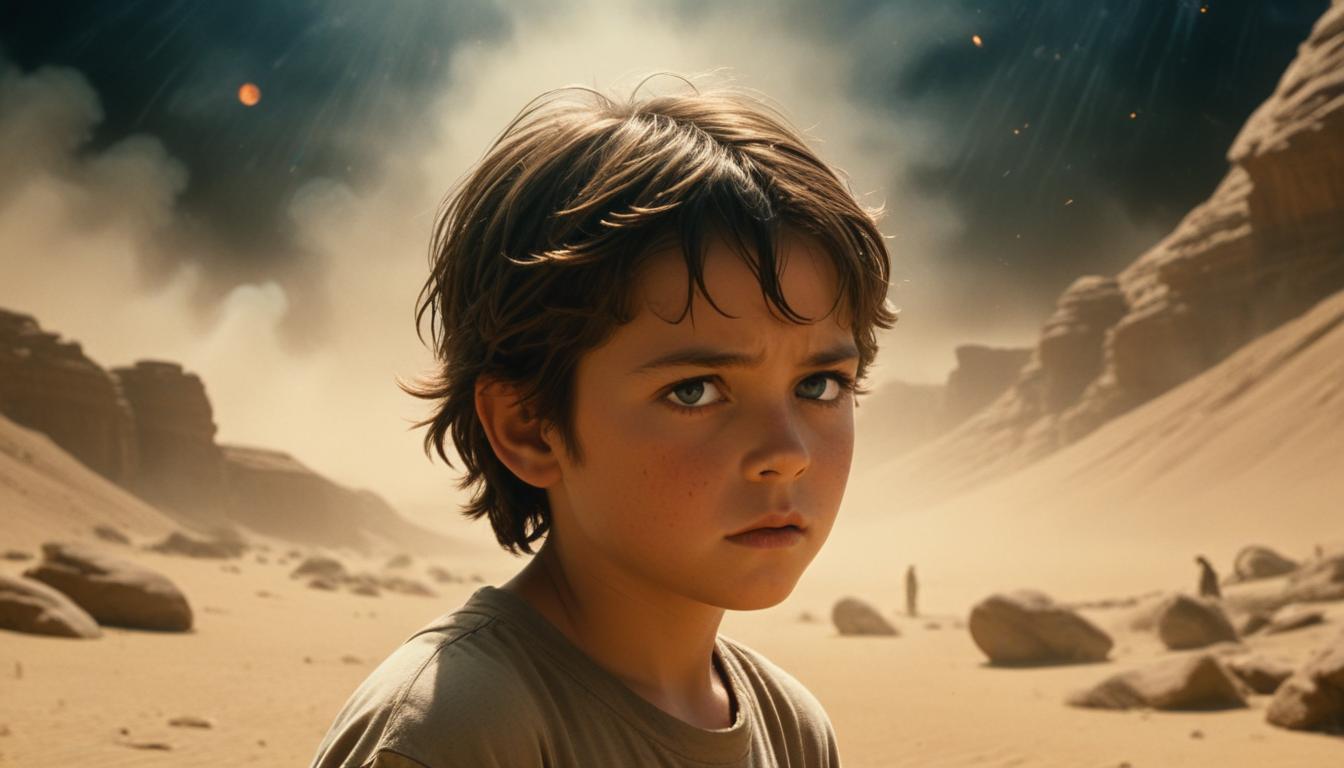
- defining visual storytelling
- classics that set the standard
- modern masterpieces of cinema
- directors who revolutionized the craft
- the future of cinematic visuals
At its core, visual storytelling transcends the spoken word, communicating emotions, themes, and narratives through the interplay of images, composition, color, and movement. It’s a medium of communication that marries technical expertise with artistic vision, creating a language that speaks directly to the human psyche. This form of storytelling mastery allows filmmakers to convey profound messages without relying heavily on dialogue, immersing the audience in a visceral, almost instinctual experience of the narrative.
Cinematic artistry often hinges on the director’s ability to guide the viewer’s eye, orchestrating how each frame contributes to the overall story. Consider the deliberate use of light and shadow to express conflict or duality, or the way a carefully chosen camera angle can instill a sense of power or vulnerability in a character. The beauty of visual storytelling lies in these intricate details; even subtle choices can have an immense emotional impact, making the story resonate long after the credits roll. This art form is about far more than aesthetics—it’s about harnessing visual brilliance to create meaning.
The power of visual storytelling lies not merely in its technical elements but in its ability to evoke reactions and forge connections. A single, silent moment can speak volumes if crafted carefully—from a meaningful glance between characters to the haunting final image of a film that lingers in the viewer’s consciousness. Icons of cinema have long understood that sometimes, the most potent storytelling occurs in the spaces between words. Through masterful composition and meticulous attention to detail, they create entire worlds that engage, inspire, and challenge the audience, showing just what’s possible when the visual medium is treated as a storyteller in its own right.
classics that set the standard
Some films transcend their era, establishing benchmarks of cinematic artistry that filmmakers study to this day. These classics didn’t merely tell stories—they crafted experiences through visual brilliance and storytelling mastery. Take, for instance, *2001: A Space Odyssey* by Stanley Kubrick. With its awe-inspiring, otherworldly visuals and meticulously composed shots, the film redefined what was possible in science fiction, relying heavily on imagery to evoke existential questions about humanity, technology, and the cosmos. Every frame feels deliberate, reinforcing Kubrick’s vision of a future simultaneously full of wonder and eerily chilling in its detachment.
Another timeless example is Alfred Hitchcock’s legendary *Vertigo*. This psychological thriller uses color, framing, and camera movements to reflect the tangled emotions and obsessive fixation of its protagonist. The infamous dolly zoom effect, often referred to as the “Vertigo effect,” visually communicates a sense of disorientation and dread, placing the audience directly in the character’s subjective perspective. Hitchcock’s ability to convey profound emotional states with visual techniques elevated the medium and pushed boundaries that directors still draw inspiration from today.
Consider also the sweeping epics of David Lean, such as *Lawrence of Arabia*. The film’s use of expansive desert landscapes translates the protagonist’s internal journey into a visual canvas, where isolation, ambition, and transformation play out against some of the most breathtaking visuals ever captured on film. The interplay of light, shadow, and scale creates a sense of grandeur while immersing the audience in the vastness and desolation of the environment. Here, storytelling mastery lies in how the visuals not only support the narrative but become a character in their own right.
And yet, these classics weren’t just technical achievements—they were deeply human stories. Charlie Chaplin’s *City Lights*, for example, eschewed dialogue entirely, relying solely on the actor’s expressions, physical movements, and carefully orchestrated mise-en-scène to tug at the heartstrings. The final scene, brimming with raw emotion and expertly framed simplicity, has become one of the most iconic moments in cinema history, exemplifying how visual storytelling can speak volumes in the absence of words.
These films set the standard by proving that the visual medium isn’t merely a tool to enhance dialogue but a language all its own. They demonstrated the power of composition, movement, and imagery to evoke images and emotions that linger long after the story ends. In crafting these enduring masterpieces, filmmakers showed future generations the unparalleled potential of integrating artistic vision with technical precision to create films that are as visually resonant as they are narratively profound.
modern masterpieces of cinema
In recent years, cinema has evolved at a staggering pace, with filmmakers using cutting-edge technology and profound artistic vision to deliver films that elevate visual storytelling to unprecedented levels. Consider Denis Villeneuve’s *Blade Runner 2049*, a sequel that not only lives up to the legacy of the original but also sets new benchmarks in cinematic artistry. With its hauntingly beautiful landscapes of a dystopian future, brought to life by Roger Deakins’ Oscar-winning cinematography, every frame feels like a painting that speaks volumes about human fragility in the face of technological advancement. From the neon-drenched cityscapes to desolate wastelands, the visual brilliance of the film mirrors its philosophical undercurrent, making it a masterclass in storytelling mastery.
Christopher Nolan’s *Inception* is yet another modern masterpiece that pushes the boundaries of visual storytelling. The film’s imaginative dreamscapes challenge traditional notions of reality and perception, using mind-bending visuals to immerse the audience in its multilayered narrative. Escher-inspired staircases that loop endlessly, cities folding onto themselves, and gravity-defying fight sequences aren’t just dazzling effects—they are deeply interwoven with the story’s themes of subconscious manipulation and existential doubt. Nolan’s meticulous attention to detail ensures that each element on screen adds to the psychological depth and emotional stakes, underscoring the integral role of visuals in narrative construction.
Equally powerful is Bong Joon-ho’s *Parasite*, a film that uses visual storytelling to communicate its searing critique of class disparity. Through stark contrasts in set design, lighting, and spatial composition, the film draws a visceral and unspoken line between the lives of the wealthy Park family and the struggling Kim family. The house itself becomes a character, with its sleek, modernistic architecture standing as a symbol of privilege, while the cramped, semi-basement home of the Kim family evokes a sense of entrapment and desperation. Bong’s deliberate framing, from the use of vertical lines to emphasize hierarchy to the striking rain-soaked sequence that mirrors the destruction of hope, reinforces the narrative themes with breathtaking precision.
The vibrant fantasy of Guillermo del Toro’s *The Shape of Water* also stands as a triumph of visual storytelling. Seamlessly blending genres, del Toro crafts a world where love and the grotesque coexist beautifully. The film’s striking green and blue hues wash over every frame, creating a dreamy, otherworldly aesthetic that feels as much a part of the story as its characters. The meticulous production design and fluid movements of the camera allow viewers to truly inhabit the enchanting yet unsettling underwater-inspired world, emphasizing visual brilliance as a storyteller in its own right.
And, of course, no discussion of modern visual masterpieces would be complete without mentioning Alfonso Cuarón’s *Gravity*. The film pushes technological boundaries to orchestrate an emotionally gripping story entirely reliant on its visuals. The opening tracking shot—a seemingly endless depiction of astronauts adrift in space—establishes an intense, almost claustrophobic immersion into the vast expanses of the cosmos. Through the interplay of sound, silence, and striking imagery, the audience is not just watching the survival story of its protagonist—they are feeling every heartbeat of her journey. This fusion of dazzling effects with emotional resonance underscores Cuarón’s storytelling mastery.
These modern works highlight how filmmakers today continue to harness and redefine the possibilities of visual storytelling. Through innovation, artistry, and a deep understanding of the visual medium, these films engage audiences at a profound level, proving that when technical innovation meets artistic vision, the result can be nothing short of transformative.
directors who revolutionized the craft
Throughout the evolution of cinema, certain directors have emerged who revolutionized the craft of visual storytelling, transforming how stories are told and experienced on screen. These visionaries didn’t just create films—they reshaped the language of cinema itself, pioneering new techniques and establishing bold visual vocabularies that continue to inspire filmmakers today. By challenging conventions and pushing boundaries, they’ve demonstrated that the heart of cinematic artistry lies in the artful interplay between the technical and the emotional, crafting moments of storytelling mastery that remain timeless.
One such revolutionary is Akira Kurosawa, whose unparalleled ability to tell stories visually has cemented his legacy as one of cinema’s greats. In films like *Rashomon* and *Seven Samurai*, Kurosawa used dynamic camera movement, weather as a narrative device, and meticulous composition to convey psychological depth and thematic complexity. His staging of action within the frame, such as the use of triangular arrangements to guide the viewer’s eye, blended visual brilliance with narrative clarity. Kurosawa’s influence extends far beyond Japanese cinema, inspiring directors like George Lucas, who drew heavily from the Japanese auteur’s storytelling methods in the creation of *Star Wars*.
Another luminary to redefine the craft is Orson Welles. His groundbreaking work in *Citizen Kane* gave the world some of the most innovative uses of deep focus, low angle shots, and non-linear storytelling. Welles and cinematographer Gregg Toland revolutionized how depth and spatial relationships could be used in film to mirror human complexities, allowing the audience to feel the weight of the characters’ motivations and struggles. Each scene was deliberate, rich with layered visuals that encouraged viewers to look beyond the surface. Welles’ work demonstrated that cinematic artistry is as much about what is seen as what is felt.
Stanley Kubrick, often considered the epitome of the perfectionist filmmaker, mastered visual storytelling in a way that fused meticulous technique with profound emotional resonance. His films—*2001: A Space Odyssey*, *The Shining*, and *A Clockwork Orange*—are iconic examples of how visuals can become a language in themselves. Whether through the haunting use of symmetry, unsettling close-ups, or calculated color palettes, Kubrick created visceral experiences that communicated complex themes without unnecessary exposition. The psychedelic Stargate sequence in *2001: A Space Odyssey* is a prime example—a mind-bending journey that uses abstract visuals to evoke existential wonder, showcasing his unparalleled storytelling mastery.
Alfred Hitchcock, known as the “Master of Suspense,” revolutionized the way tension and unsaid emotions are conveyed through visuals. His use of the dolly zoom effect in *Vertigo* visually captured emotional vertigo itself, seamlessly merging form with feeling. Hitchcock’s signature techniques, such as storyboarding every frame like a painting, allowed him to maintain complete control of the viewer’s experience. By seamlessly blending visual brilliance with psychological insight, Hitchcock turned the camera into more than a tool—it became the audience’s guide, manipulating what they felt and when they felt it.
The work of Wong Kar-wai is another testament to the power of visual storytelling. With films like *In the Mood for Love*, Wong created poetic, dreamlike narratives where longing and unspoken connections are expressed through vivid colors, slow-motion sequences, and poignant framing. His use of mood and atmosphere, often accentuated by Christopher Doyle’s lush cinematography, made the emotional states of his characters palpable. Wong’s films prove that sometimes storytelling mastery lies not in laying everything bare but in leaving spaces for the audience to feel what is left unsaid.
Then there’s Andrei Tarkovsky, whose films like *Solaris* and *Stalker* redefined the spiritual and philosophical potential of cinema. Tarkovsky used extended takes, ethereal imagery, and enigmatic compositions to delve into the human soul‘s depths. His visuals were not merely aesthetic but meditative, urging viewers to contemplate the infinite. Tarkovsky’s innovative use of time and space created cinematic poetry and showed that visual storytelling could transcend narrative convention to become an almost transcendent experience.
Finally, the contemporary auteur Terrence Malick continues to carry the torch of visual storytelling innovation. In works like *The Tree of Life* and *The Thin Red Line*, Malick employs natural light, fragmented editing, and poetic montages to explore themes of existence and interconnectedness. His use of fluid, floating camera movements captures moments of transient beauty, weaving an emotional tapestry that’s both intimate and cosmic. Malick’s unwavering commitment to visual artistry reminds us that film is not just an entertainment medium but a profound form of expression.
These directors have not only mastered the craft of filmmaking; they’ve elevated it, turning the medium into a playground for boundless creativity and emotional depth. Through their groundbreaking techniques and visionary approaches, they have shown us what’s possible when cinematic artistry and visual brilliance converge. Their influence resonates in every frame of film made today, urging new generations of storytellers to continue expanding the visual language of cinema.
the future of cinematic visuals
The future of cinema is poised to be an awe-inspiring blend of technological advancements and bold artistic experimentation, promising a new era of visual brilliance that will redefine the way stories are told on screen. As filmmakers continue to push the boundaries of what’s possible, innovations in virtual reality (VR), augmented reality (AR), and artificial intelligence (AI) are revolutionizing the cinematic landscape, granting storytellers unprecedented tools to elevate narrative immersion. These technologies are not merely enhancing the visual medium—they are reshaping the very fabric of cinematic artistry, allowing filmmakers to craft deeply personal, interactive, and emotionally resonant experiences.
One emerging frontier in visual storytelling is the rise of virtual reality, which transforms the act of watching a film into a fully immersive experience. Unlike traditional cinema, where the viewer is a passive observer of a story unfolding on a defined screen, VR places the audience directly within the narrative. This shift expands the storytelling canvas into a 360-degree space, empowering filmmakers to guide attention dynamically while still leaving room for exploration. Projects like Alejandro González Iñárritu’s *Carne y Arena* exemplify this potential—the VR installation immerses viewers in the harrowing journey of migrants crossing the U.S.-Mexico border, making each moment visceral and deeply affecting through the sensory immediacy of VR. It’s a prime example of storytelling mastery, showing how technology can amplify empathy and bring untold stories to life with unparalleled intensity.
Artificial intelligence is another game-changer in the realm of visual storytelling, offering filmmakers innovative ways to create, edit, and even conceptualize their work. AI-driven tools are already being used to generate hyperrealistic de-aging effects, design intricate digital environments, and analyze data to predict audience engagement. However, its true potential lies in its ability to fuel creativity rather than replace it. Programs like MidJourney and Runway, for instance, are giving filmmakers the means to visualize design concepts or experiment with stylistic ideas without the constraints of traditional production timelines or budgets. In the hands of visionary directors, AI becomes a collaborative partner, accelerating the realization of ambitious projects and fostering a new wave of visual brilliance that blurs the line between the human and the machine.
Augmented reality, too, promises to revolutionize the cinematic experience by merging the physical and digital worlds. AR introduces the possibility of overlaying film narratives onto real-world environments, allowing audiences to engage with stories in ways that are deeply personal and location-based. Imagine walking through a city and encountering scenes from a film integrated into your surroundings, each seamlessly adapting to your perspective and movement. This technology opens up vast possibilities for interactive and multi-layered storytelling, democratizing the cinematic experience by bringing it directly into the audience’s everyday life. Such advancements ensure that storytelling mastery will expand beyond the confines of traditional theaters, ushering in narratives that are as dynamic and fluid as the medium itself.
Innovations in motion capture and virtual production are also redefining the aesthetics of modern filmmaking. Films like *Avatar: The Way of Water*, with its groundbreaking underwater motion capture technology, showcase how far the medium has come in its ability to create photorealistic yet emotionally resonant performances. These advancements allow filmmakers to breathe life into entirely digital worlds while preserving a sense of intimacy and authenticity in the characters and their stories. Meanwhile, virtual production stages, like the one pioneered in Disney’s *The Mandalorian*, integrate real-time visual effects with live-action performances, creating seamless blends of physical and digital spaces. This technique not only saves time and resources but also empowers directors to visualize complex scenes during production, enabling them to achieve storytelling mastery through greater creative freedom.
One of the most exciting aspects of this technological evolution is how it is democratizing the tools of visual storytelling. As innovations like AI-driven editing software and affordable VR cameras become more accessible, independent filmmakers are gaining the ability to create visually stunning projects without the need for massive budgets. This shift has the potential to foster more diverse voices in cinema, offering fresh perspectives and novel stories to global audiences. The future will almost certainly see a proliferation of experimental films that challenge conventions and explore entirely new modes of visual expression, proving once again that cinematic artistry is as much about resourcefulness and vision as it is about technology.
Looking ahead, the fusion of technology and imagination suggests a future where the traditional boundaries of cinema will cease to exist. Innovations in holography and spatial computing could eventually project films into three-dimensional spaces, allowing audiences to walk through narratives as if they were fully realized worlds. Machine learning algorithms may enable real-time story adaptation based on viewer emotions, making each cinematic experience deeply personal and unique. And as sustainability becomes an increasingly pressing concern, energy-efficient technologies and digital solutions promise to revolutionize production methods, ensuring that the art of filmmaking remains both innovative and environmentally conscious.
The future of cinematic visuals stands as a testament to humanity’s insatiable drive for creative expression and technical innovation. As technological frontiers expand, so too does the potential for visual brilliance, setting the stage for the next chapter in storytelling mastery. It’s an exhilarating time for both creators and audiences—a moment where the dreams of today’s visionaries are becoming the building blocks of tomorrow’s cinematic artistry. In this ever-evolving landscape, one thing is clear: the best stories are yet to be told, and the canvas for telling them is virtually limitless.
