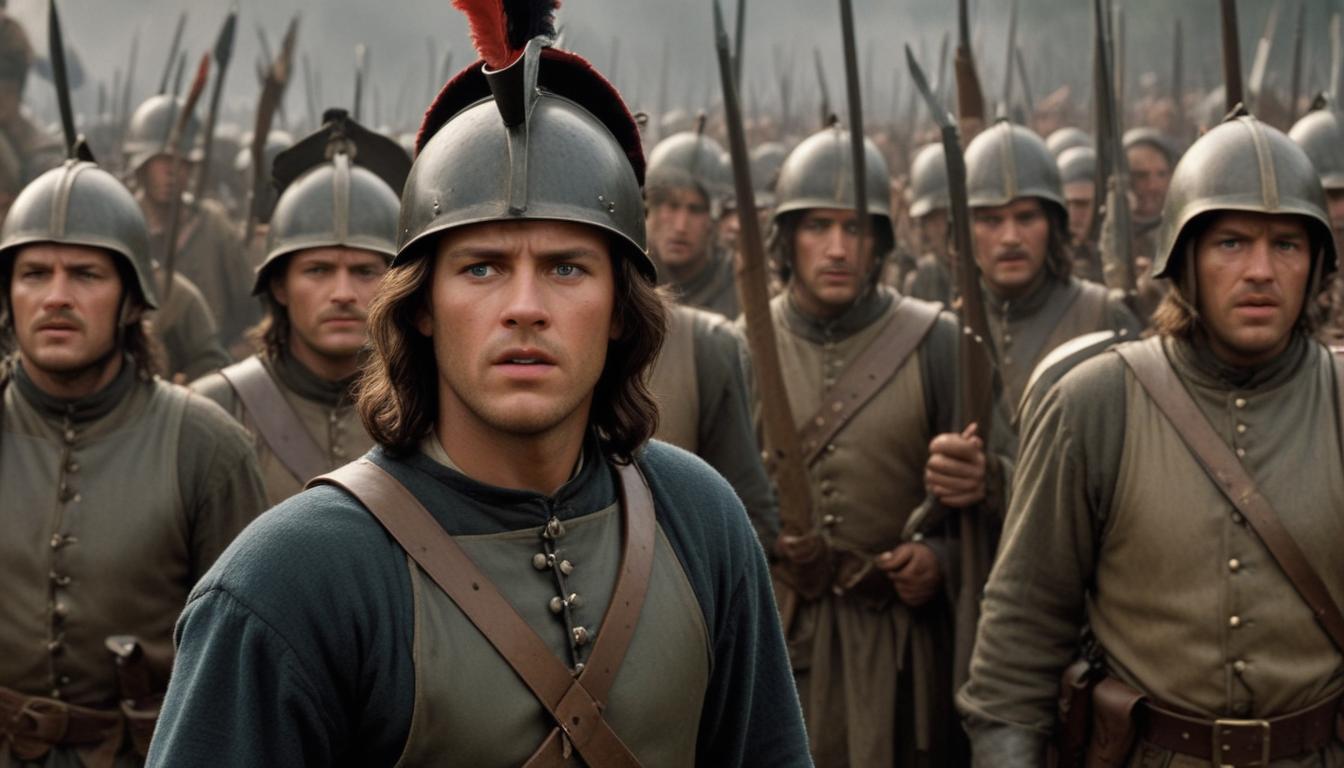
- movies that bring history to life
- the importance of accuracy in historical films
- standout performances in true-to-life stories
- directors dedicated to historical detail
- case studies of cinematic precision
Movies have the extraordinary ability to transport audiences to different eras, allowing them to witness moments in history with unparalleled immediacy. When it comes to historical accuracy, certain films stand out for their meticulous attention to detail, ensuring every frame reflects the true essence of the time. Accurate films like these not only entertain but also serve as windows into the past, providing insights into historical events, cultures, and characters that might otherwise remain distant or abstract. This level of true-to-life storytelling requires intensive research and a dedication to authenticity, showing respect for the very history they aim to portray.
Through set design, costumes, and language, these films bridge the gap between the modern world and bygone days. For instance, productions such as “Lincoln” recreate the political and social atmosphere of the Civil War era with vivid detail, making the audience feel as though they’ve stepped into the 19th century. Similarly, “12 Years a Slave” immerses viewers in the harrowing realities of slavery through environments and dialogue that feel starkly authentic, leaving a lasting impression and fostering a deeper understanding of the era. These cinematic masterpieces exemplify how history in movies can compel modern audiences to engage actively with the past and even re-evaluate their understanding of it.
Such films often rely on historical advisors, archival records, and primary sources to guide the creative process. By choosing accuracy over sensationalism, they elevate their narratives and earn the credibility of historians as well as viewers. Audiences today demand not only an engaging plot but also the weight of factual authenticity behind it. This sense of reliability further highlights the importance of accurate films in storytelling, especially when recounting pivotal events or underrepresented stories. From the smallest cinematic detail to the overarching plot, such films can make real history come alive while maintaining their commitment to honesty.
the importance of accuracy in historical films
Historical films hold a unique place in cinema by blending entertainment with education, offering viewers an immersive look at the past. But for these films to truly make an impact, accuracy is paramount. Accurate films don’t just dramatize events; they carry the weight of truth, illuminating the real stories behind the spectacle and fostering a deeper connection between audiences and history. This commitment to precision elevates not just the storytelling but also the broader cultural awareness of the events and eras being depicted. Historical accuracy moves these movies beyond mere creative interpretation, allowing them to contribute to our collective understanding of how people lived, struggled, and achieved throughout history.
A key reason accuracy in historical films matters so much is their ability to shape public memory. For many viewers, movies are often the first or even the only exposure they’ll have to a particular historical event. This puts a great responsibility on filmmakers to represent their subjects with integrity. Sticking to the facts honors those who lived through these moments while simultaneously ensuring that the audience receives an authentic and credible depiction. For instance, films like “Schindler’s List” or “Apollo 13” resonate so deeply because they go beyond artistic license to painstakingly present true-to-life storytelling. Such attention to detail ensures that these stories carry the gravitas they deserve, sparking meaningful conversations long after the credits roll.
The importance of accuracy also extends to the nuances of history, such as smaller cultural details or the everyday realities of the time period. A perfectly researched setting or historically faithful costume can instantly transport viewers, grounding them in the world of the characters. This authenticity enhances the emotional power of the narrative, as audiences feel more invested when they believe in the world unfolding before them. “Dunkirk” is an excellent example of this, as Christopher Nolan’s use of real filming locations, vintage aircraft, and practical effects rather than CGI immerses viewers in the life-or-death stakes faced by soldiers during World War II. The end result is more than just a film—it becomes a visceral experience that resonates with modern audiences.
Moreover, historical accuracy is crucial in addressing underrepresented or historically erased stories. True-to-life storytelling allows these voices to be heard, correcting historical biases and shining a light on truths that history books may neglect or oversimplify. Films like “Hidden Figures” and “Selma” illustrate this power by meticulously reconstructing events and ensuring that viewers come away with not just an emotional impression, but also a substantial understanding of the struggles and triumphs depicted. In this way, historical films can actively contribute to a deeper dialogue about justice, representation, and humanity‘s shared past.
Audiences increasingly appreciate the value of accuracy in history in movies, as it reinforces a sense of trust in the narratives presented. This trust enhances the enjoyment of the film while also highlighting the inherent power of storytelling as a tool for education. With the right balance of accuracy and artistic vision, filmmakers can craft works that inspire, inform, and resonate across generations, reminding us that the past is never truly distant.
standout performances in true-to-life stories
There is no denying that one of the key elements that elevate historically accurate films is the power of the performances. When actors fully embody real-life figures or fictional characters grounded in significant events, they breathe life into moments of history that might otherwise remain static or lifeless on the page. True-to-life storytelling often hinges on these portrayals, as they humanize the broad strokes of historical events, making them accessible and emotionally resonant to viewers. Performances rooted in authenticity allow audiences to connect with history on a personal level, fostering empathy and a deeper understanding of the people who shaped the world we know today.
An excellent example of such a transformative performance can be seen in Daniel Day-Lewis’ portrayal of Abraham Lincoln in “Lincoln.” Beyond simply replicating the voice and mannerisms of the 16th President of the United States, Day-Lewis captured the nuances of Lincoln’s personality—his contemplative nature, political shrewdness, and underlying humanity. This meticulous attention to detail turned what could have been a distant, monolithic historical figure into a profoundly relatable man facing immense challenges. The result was not only an unforgettable cinematic experience but also a deeply effective form of true-to-life storytelling that stayed true to both the man and the time period.
Similarly, in “12 Years a Slave,” Chiwetel Ejiofor’s haunting and heartfelt performance as Solomon Northup not only brought the real-life story of a free man sold into slavery to the forefront but also evoked the physical and emotional toll of this harrowing chapter in American history. Ejiofor’s ability to convey subtle yet powerful emotions added layers of complexity to the narrative, compelling audiences to confront the brutal realities of slavery in ways both historically accurate and deeply humanizing. It is through performances like these that history in movies transforms from mere recounting of events to visceral storytelling, leaving an indelible mark on viewers.
Another standout example is Meryl Streep’s portrayal of Margaret Thatcher in “The Iron Lady.” Streep’s performance—backed by extensive research into Thatcher’s life, speeches, and even her personal idiosyncrasies—went beyond impersonation. It revealed the complexities of a leader juggling power, sexism, and personal struggles during a transformative era in British politics. These layers brought depth to the character while staying true to the historical record, making Streep’s Thatcher a figure audiences could understand, if not necessarily agree with. This is a testament to how accurate films can achieve authenticity while still crafting compelling drama.
Of course, no discussion of performances in historical films would be complete without mentioning Ben Kingsley’s portrayal of Mahatma Gandhi in “Gandhi.” Kingsley’s uncanny likeness to the Indian leader and his ability to channel Gandhi’s spirit of nonviolent resistance made the film a cinematic and historical masterpiece. By dedicating himself entirely to understanding and embodying the historical figure, Kingsley ensured that viewers didn’t just see Gandhi as a distant icon—they experienced his triumphs, struggles, and humanity. It’s this level of precision and dedication that underscores how essential accurate performance is to history in movies.
Even in stories where historical figures themselves are not the focus, actors play a critical role in grounding the narrative in authenticity. In “Dunkirk,” for instance, the largely unknown cast delivered compelling performances that emphasized the collective experience of survival during World War II rather than focusing on individual heroism. This approach added to the film’s immersive quality, drawing audiences into the chaos and resilience of the soldiers and civilians involved in the evacuation. A small, understated expression or moment of fear captured by an actor can often communicate more about the reality of historical events than an entire page of narration.
Ultimately, it is the dedication of actors to their craft that allows historical periods to come alive on screen. Their commitment to presenting accurate, emotion-filled portrayals ensures that these films not only entertain but also educate, preserving the past in ways that inspire future generations. Through their transformative performances, actors bridge the emotional gap between audiences and the figures they embody, ensuring that true-to-life storytelling resonates long after the screen fades to black. This is one of the many reasons why accurate films hold such an important place in cinema, ensuring that history remains both alive and profoundly felt.
directors dedicated to historical detail
Behind every historically accurate film is a director whose dedication to detail brings the past vividly to life. These filmmakers approach their craft with a reverence for history, striving to balance artistic vision with factual authenticity. Their work transcends entertainment, transforming history in movies into immersive experiences that educate, inspire, and resonate with audiences. Such precision requires not only a deep understanding of historical events but also the ability to translate those events into compelling storytelling. This delicate process often involves collaboration with historians, researchers, and cultural consultants to ensure accuracy on every level—from the grand scope of the narrative to the minutest details within a scene.
Steven Spielberg is often celebrated as a master of cinematic storytelling, and his commitment to historical accuracy is evident in films like “Schindler’s List” and “Saving Private Ryan.” In the latter, Spielberg’s unflinching portrayal of the D-Day invasion stands out as one of the most harrowing depictions of World War II in film history. The use of handheld cameras, practical effects, muted color palettes, and corroborated accounts of the landing all combine to give audiences an almost visceral experience of the battle. Spielberg’s dedication to accuracy in this true-to-life storytelling extended beyond the visual depiction; he worked closely with military veterans and historians, ensuring that every detail reflected the grim reality of the war. Such effort elevates the film, earning its place not just as a cinematic milestone but as a testament to the lived experiences of those who fought.
Similarly, Ridley Scott’s attention to the intricacies of historical authenticity is evident in “Gladiator.” While certain liberties were taken for dramatic purposes, Scott spared no effort in recreating the world of Ancient Rome with astounding detail. From the architecture of the Colosseum to the garb of Roman citizens and soldiers, Scott immersed audiences in the visuals of the era. His collaboration with historians and archaeologists allowed “Gladiator” to set a high standard for historical epics, bridging the gap between cinematic spectacle and historical immersion. By prioritizing accuracy without compromising on compelling imagery, Scott exemplified how dedication to detail can bring the past to vibrant life.
Kathryn Bigelow’s “Zero Dark Thirty,” a gripping account of the decade-long hunt for Osama bin Laden, showcases another level of directorial commitment to precision. Working with declassified materials, field experts, and journalists, Bigelow aimed to present an authentic chronicle of the manhunt. Her portrayal of the operational and emotional toll of counterterrorism was praised for its stark realism. By grounding the story in facts while crafting an emotionally charged narrative, Bigelow created an accurate film that appealed to both audiences and critics, solidifying the importance of authenticity in modern historical cinema.
One of the great examples of devotion to historical detail on-screen is Ron Howard’s work on “Apollo 13,” where he meticulously reconstructed the infamous NASA mission. From recreating the interiors of the Apollo spacecraft to shooting scenes in zero gravity to mirror the astronauts’ experiences, Howard went the extra mile to honor history. He also worked extensively with NASA consultants and pored over transcripts of the actual mission to capture the tense communication between the ground control team and astronauts. The result was a true-to-life storytelling triumph where every detail, from sound design to dialogue cadence, contributed to an authentic and gripping portrayal of human ingenuity under pressure.
Christopher Nolan’s craft in “Dunkirk” stands as an unparalleled example of immersion through historical realism. For this World War II epic, he took approaches that rejected dependence on CGI, instead shooting in authentic locations, utilizing real period-accurate aircraft, and focusing on practical effects to depict the chaos and urgency of the Dunkirk evacuation. Nolan’s dedication to non-linear storytelling also reflected the fragmented and chaotic experience of war, challenging viewers to live through the historical moment second-by-second. This commitment to meticulous detail ensured that “Dunkirk” was not just a historical film but a visceral representation of survival and sacrifice.
For filmmakers like Ava DuVernay, historical accuracy goes beyond aesthetics to focus on ensuring that untold or underrepresented stories are finally given the respect they deserve. DuVernay’s “Selma” details a pivotal period in the Civil Rights Movement, following Martin Luther King Jr.’s leadership during the march from Selma to Montgomery. Her insistence on using historical speeches, contextually accurate settings, and expert consultants resulted in a deeply emotional and educational film that shone a light on the systemic struggles of the era. DuVernay’s ability to imbue her storytelling with historical precision yet undeniable modern relevance helped anchor “Selma” as a cornerstone of true-to-life storytelling.
Filmmakers who pour their passion into accuracy prove that truthful storytelling does not hinder creativity—it enhances it. Their skill in intertwining facts with their artistic vision breathes life into the legacy of the people and events they portray, ensuring these stories transcend time. Through their efforts, they inspire both audiences and future directors to approach history in movies with the same respect and diligence, proving that the past, when depicted authentically, can resonate as powerfully today as it did in its own time.
case studies of cinematic precision
When it comes to crafting history in movies, certain films have emerged as exemplary case studies of cinematic precision. These productions go far beyond surface-level storytelling, demonstrating how accuracy in historical films can enrich narratives and provide audiences with a window into the past. By blending meticulous research with true-to-life storytelling, these films not only honor the events and people they depict but also set the standard for what audiences have come to expect from accurate films.
One such standout is “Lincoln,” directed by Steven Spielberg. The film focuses on the last months of Abraham Lincoln’s life, particularly the passage of the 13th Amendment. Spielberg’s commitment to authenticity meant that every detail, from historical dialogue to the exact lighting in the rooms of Washington D.C., was carefully considered. Costumes, hairstyles, and even the president’s famously high-pitched voice were based on extensive historical records. Daniel Day-Lewis studied Lincoln’s writings and accounts from those who knew him, ensuring his portrayal was as authentic as possible. These painstaking efforts turned “Lincoln” into not just a cinematic masterpiece, but an immersive history lesson that engrossed viewers while staying rooted in truth.
Moving to World War II, “Saving Private Ryan” has earned its place as one of the most accurate films depicting combat in cinema history. Director Steven Spielberg worked with military historians and veterans to ensure the portrayal of the Normandy invasion was as true-to-life as possible. The harrowing opening scenes—the chaos, the terror, and the tragedy of the beach landings—were inspired by firsthand accounts of soldiers who survived D-Day. The use of desaturated color grading and hand-held camera shots further heightened its realistic feel, drawing audiences into the visceral, disorienting experience of war. This level of precision not only honored the soldiers who fought but also set a benchmark for how history in movies could be represented with brutal honesty.
Another powerful example of cinematic precision is found in “12 Years a Slave,” directed by Steve McQueen. Based on Solomon Northup’s autobiographical account of being kidnapped and sold into slavery, the film reveals the brutal realities of America’s dark history. McQueen worked closely with historians to ensure the environments, dialogue, and costumes were period-accurate. From the architectural details of plantation homes to the language of slavery-era America, every element was designed to immerse the viewer in Northup’s world. The unflinching realism of the cinematography and the extraordinary performances by the cast brought an emotional depth to the story, ensuring it resonated long after the credits rolled. It became a textbook example of true-to-life storytelling woven into a harrowing yet essential narrative.
The Apollo 13 mission, brought to the screen by director Ron Howard in “Apollo 13,” provides a different kind of case study in cinematic precision. This film posed the unique challenge of recreating a 1970s space mission with complete technical accuracy. By collaborating directly with NASA engineers and astronauts, Howard recreated the interiors of the spacecraft and mission control down to the smallest detail. Authentic mission transcripts were used as dialogue to ensure historical fidelity. Even scenes of weightlessness were filmed on a reduced-gravity aircraft, known as the “Vomit Comet,” vividly capturing the physical reality of being in space. These immersive details paid off, as the movie became not just a thrilling survival story but a detailed chronicle of human ingenuity.
In examining medieval history, few films have achieved the level of authenticity seen in “Braveheart,” notwithstanding its few creative liberties. Director and star Mel Gibson worked with historians to recreate the Scottish landscapes, costumes, and battles, bringing the legend of William Wallace to roaring life. While some criticism has been leveled at the film for certain historical inaccuracies, such as the timeline of events, the overall commitment to immersing viewers in 13th-century Scotland remains undeniable. The depictions of rugged battle scenes, complete with historically appropriate weapons and tactics, helped audiences feel the raw and bloody reality of medieval warfare.
On the opposite side of the spectrum, “Hidden Figures” provides an intimate look at the lives of unsung heroes of the 1960s space race. This film, directed by Theodore Melfi, meticulously showcases the contributions of three African American women—Katherine Johnson, Dorothy Vaughan, and Mary Jackson—who worked for NASA during a time of institutionalized racism and sexism. The filmmakers worked carefully with historians, drawing on primary sources to ensure the film authentically depicted not just the professional challenges faced by these women but also the nuanced cultural atmosphere of mid-20th-century America. The result was a moving, accurate film that not only highlighted their invaluable work but also encouraged a reassessment of history’s overlooked contributors.
Christopher Nolan’s “Dunkirk” also stands as a masterclass in historical fidelity and cinematic innovation. Unlike traditional war films, Nolan avoided character-driven dramatization, opting instead for an experiential approach that immersed viewers in the broad, collective story of the Dunkirk evacuation. By using practical effects, real locations, and vintage aircraft, Nolan eliminated any sense of artificiality. He replicated the tension, scale, and stakes of the operation while remaining steadfastly grounded in historical accounts. This unsparing attention to detail allowed “Dunkirk” to transcend its narrative limitations, delivering an intensely realistic portrayal of survival and resilience during World War II.
Cinematic precision is also essential when addressing periods of immense cultural or political upheaval. Ava DuVernay’s “Selma” provides a definitive portrait of the Civil Rights Movement, focusing on Martin Luther King Jr.’s leadership during the Selma-to-Montgomery marches. The film’s creators worked diligently to capture the look, tone, and emotional weight of the 1965 struggle for voting rights. The costumes, settings, and speeches reflected historical realities, and DuVernay’s bold, unvarnished storytelling shed light on both the humanity and the systemic brutality of the era. True-to-life storytelling of this caliber educates and empowers modern audiences while paying homage to the people and sacrifices of the past.
These cases illustrate that accuracy in historical films is not merely a question of replicating facts—it’s about creating an experience that leaves viewers feeling as though they’ve stepped into history. By delving deep into research and collaborating with experts, filmmakers give audiences an unparalleled sense of time, place, and humanity. Accurate films like these honor their subjects and inspire a reverence for history, reminding us of its profound relevance to our lives today.
