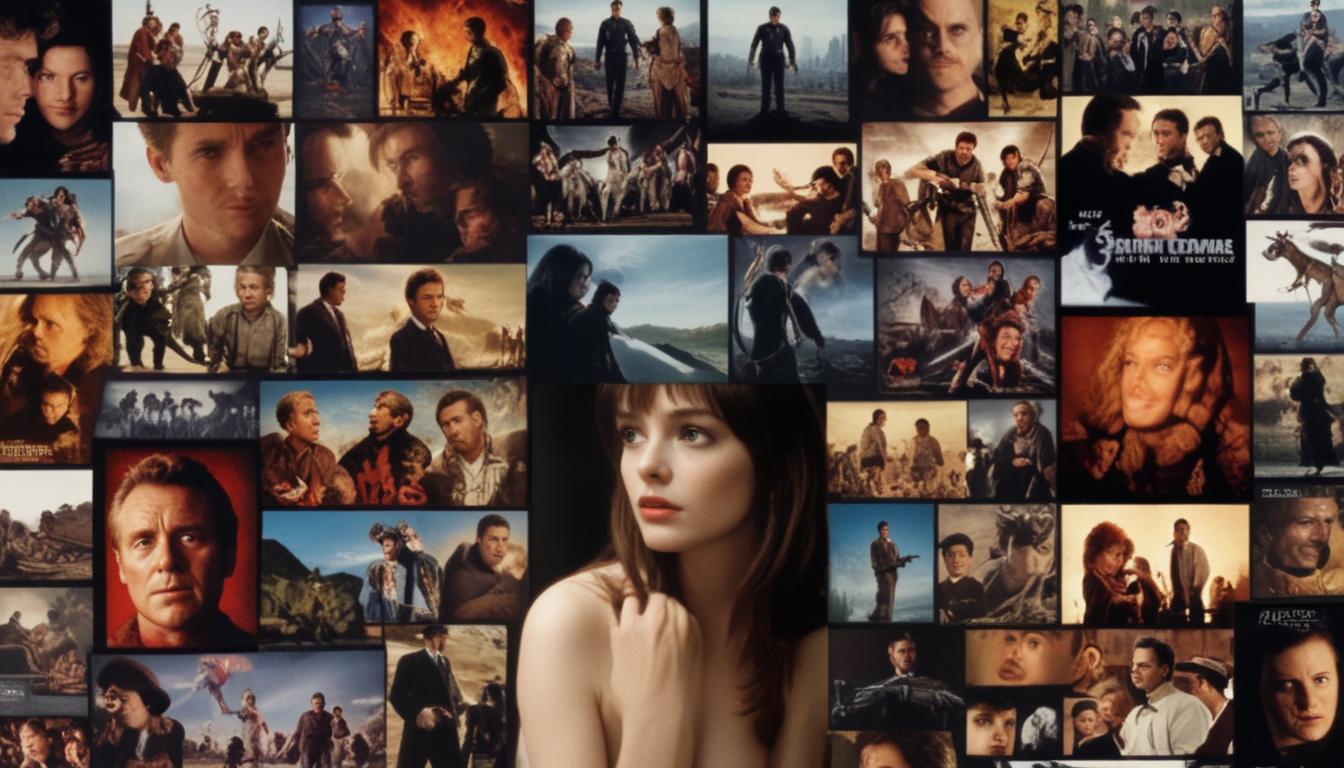
- iconic visuals that defined cinema
- unforgettable dreamscapes on screen
- breathtaking use of color and light
- haunting imagery that lingers
- surreal moments beyond imagination
Some films have etched themselves into the collective memory of audiences worldwide through their iconic visuals, moments so striking they transcend time and become cultural touchstones. Think of the silhouetted sunrise in “The Lion King,” when young Simba is presented to the kingdom—a breathtaking image that has become synonymous with the circle of life itself. Such visuals carry not only artistic precision but also an unforgettable emotional weight, seamlessly merging storytelling with visual artistry.
Take Stanley Kubrick’s “2001: A Space Odyssey,” for instance. The bone spiraling through the air, transitioning into the spacecraft, is an unforgettable scene that revolutionized how cinema could convey the passage of time and evolution. It’s not just about the technical brilliance behind these visuals; it’s the way they evoke wonder and ignite the imagination, leaving an indelible mark on those who watch.
Alfred Hitchcock’s “Psycho” forever changed the language of suspense with the infamous shower scene. The rapid cuts, the shadowy figure behind the curtain, the knife slicing through flesh (implied more than shown) combined with Bernard Herrmann’s shrieking score created an unforgettable sequence. It’s impossible to think back on the golden age of cinema without this visually impactful moment standing front and center as a testament to Hitchcock’s pioneering mastery of tension through imagery.
Then there’s the audacious creativity of films like “The Matrix,” which redefined modern sci-fi with its gravity-defying “bullet time” sequence. As Neo dodges bullets in slow motion, twisting amidst a cascade of shimmering CG projectiles, audiences were left in awe of how visual effects could propel storytelling to new heights. Films like these don’t just present eye-catching shots—they create movements, redefining standards and inspiring a generation of filmmakers to explore what’s possible.
Even more classical imagery like the burning plantation in “Gone with the Wind” or the heartbreaking isolation of Charlie Chaplin’s Tramp as he walks off into the horizon in “City Lights” resonates deeply with viewers, reminding us of cinema’s power to craft images that speak universally. These aren’t merely moments in films—they’re cultural imprints, symbolic of the stories and eras they represent, and proof that cinema is as much a visual medium as it is a narrative one.
In these visually impactful films, it’s clear that iconic visuals are more than just frames captured on camera. They are the soul of filmmaking, a medium where a single carefully composed shot can say more than an entire page of dialogue. With their unforgettable scenes, these films have defined the visual language of cinema for generations past and yet to come.
unforgettable dreamscapes on screen
Some of the most visually impactful films transport us beyond the physical world, immersing us in dreamscapes so vivid and surreal that they feel almost palpable. These unforgettable scenes blur the line between fantasy and reality, drawing us into the subconscious minds of their characters and leaving us to marvel at the artistry of filmmaking. Few films have achieved this feat with the intensity of Christopher Nolan’s “Inception.” From the moment we see a city bending onto itself like a Möbius strip, the film challenges the very fabric of our perception. The spinning top, a subtle yet enduring symbol of the blurred boundary between dreams and waking life, anchors the audience in a perpetual state of questioning—and wonder. The collapsing dreamscapes of limbo are both beautiful and unsettling, a perfect visual metaphor for the fragility of the human mind’s deepest recesses.
Federico Fellini’s “8½” is another masterpiece that captures dreams in their purest cinematic form: fluid, chaotic, and poetic. The director transports viewers into a world where reality and fantasy coexist, blending memories, desires, and regrets. The iconic opening sequence, where the protagonist Guido escapes a traffic jam by floating into the sky before being yanked back to Earth, perfectly encapsulates the surreal nature of dreams. Every frame of this film feels like a journey into the subconscious, a vivid tapestry of imagery that lingers long after the credits roll.
Similarly, David Lynch’s “Mulholland Drive” revels in the disorienting and haunting qualities of the dream world. The film’s layered narrative is filled with iconic visuals, from the eerie blue box that holds cryptic answers to the unnerving encounter behind Winkie’s diner. These images make the film unforgettable, embodying the elusive and unsettling nature of dreams veering into nightmares. Lynch’s mastery lies in his ability to create an atmosphere where the surreal feels eerily familiar, as though we’ve wandered into someone else’s subconscious yet recognize our own fears and desires reflected in it.
In Guillermo del Toro’s “The Shape of Water,” a dreamlike quality permeates even the mundane, transforming an otherwise ordinary world into something otherworldly. The underwater sequences, particularly the intimate moment when Eliza and the amphibian creature float together, are pure visual poetry. Del Toro doesn’t merely show us a fantastical realm; he invites us to lose ourselves in its ethereal beauty, reminding us that dreams can be as tender as they are strange.
Terry Gilliam’s “The Adventures of Baron Munchausen” explodes with whimsical, surreal imagery drawn straight from fantastical tales and fever dreams. From a journey to the Moon on a flying cannonball to a sandstorm battle between giants, the film is a carnival of impossible visuals that are as absurd as they are enchanting. The escapades of Baron Munchausen take us to a world where imagination reigns supreme, effortlessly conjuring the childlike wonder that fuels our wildest dreams.
These iconic visuals and dreamlike landscapes remind us of the boundless possibilities of cinema. Found in these unforgettable scenes is cinema’s unmatched ability to push the boundaries of storytelling, merging the personal and the fantastical. By venturing into the realm of dreams, these films don’t just offer visual splendor; they tap into the subconscious, encouraging us to examine our hopes, fears, and desires, leaving imprints that are as emotional as they are awe-inspiring.
breathtaking use of color and light
Few elements in cinema are as fundamental to its emotional resonance as the meticulous use of color and light. The transformative power of these visual tools allows filmmakers to infuse every frame with mood, meaning, and intensity, elevating compelling stories into unforgettable works of art. These breathtaking compositions aren’t merely beautiful images—they are integral to the story, pulling viewers into worlds where every shade and shadow serves a purpose.
Take, for instance, the dazzling vision of Wong Kar-wai’s “In the Mood for Love.” The film is a masterclass in visual storytelling, where rich, moody colors of reds, yellows, and browns wash over every frame, immersing us in a melancholic haze of repressed emotions and forbidden longing. The play of light and shadow, often fractured through textured glass or cast across narrow corridors, mirrors the characters’ constrained desires, creating an intimacy that words could never fully convey. Every scene feels like a portrait, each frame imbued with iconic visuals that linger in the mind long after the final shot fades.
Similarly, in Nicolas Winding Refn’s “Drive,” the bold neon palette of pinks, blues, and golds becomes the lifeblood of the film’s noir-inspired aesthetic. Here, light is not just a technical element but a character in itself, emphasizing the pulsating tension between violence and tenderness. In particular, the golden-hour glow of the film’s quieter moments contrasts sharply with the darkened, neon-drenched streets, crafting unforgettable scenes that balance beauty with brutality. It’s a visually impactful film that proves how color and light can underscore the dualities within a single story.
In Guillermo del Toro’s “Pan’s Labyrinth,” the use of color is nothing short of spellbinding, contrasting the cold blues and greys of the harsh real world with the warm, golden hues of its fantastical underworld. This deliberate shift immerses the viewer in Ofelia’s imagination, blurring the lines between reality and fantasy. The warm candlelight of the Faun’s lair or the sickly greens of the toad’s cavern aren’t just aesthetics; they underscore key emotional beats, guiding us through Ofelia’s journey with a visual language that speaks directly to the subconscious.
Notable too is the way Denis Villeneuve utilizes light to stunning effect in “Blade Runner 2049.” From the stark, washed-out yellows of a desolate Las Vegas to the muted blues of nighttime Los Angeles rain, Villeneuve’s use of color and illumination conveys the film’s overarching themes of isolation and artificiality. The iconic visuals of K walking through a barren, orange-hued wasteland evoke a startling emotional emptiness, while the interplay of shadows and light in Wallace’s headquarters creates an atmosphere of quiet menace and omniscient control. These carefully constructed shots elevate the film into a masterpiece of visual storytelling.
On the opposite end of the spectrum, the sweeping, saturated landscapes of “The Grand Budapest Hotel” by Wes Anderson showcase how color can bring out the whimsical and absurd in cinema. Anderson’s distinctive pastel palette, framed by his signature symmetrical compositions, transforms every frame into a meticulously crafted work of art. His use of lighting—bright, cheerful, and always deliberate—imbues the film with a sense of timeless charm that is impossible to forget. His unique approach highlights the quirky yet deeply human moments embedded within his stories, creating a tone that exists somewhere between nostalgia and surrealism.
Even in those films that delve into darker themes, color and light emerge as profound storytelling partners. Consider Stanley Kubrick’s “The Shining,” where harsh lighting, muted tones, and garish bursts of crimson evoke dread and emotional instability. The unforgettable scene of twin girls standing in the corridor, bathed in eerie, dreamlike fluorescence, is just one example of how light serves to unsettle and captivate in equal measure. Kubrick’s haunting use of color mirrors the descent into madness, ensuring these images never leave your mind.
Breathtaking use of color and light is not simply a technical achievement—it is a narrative device that elevates filmmaking to its highest artistic form. These visually impactful films remind us of the profound ways in which cinema captures and communicates emotion, crafting experiences that resonate deeply. From the vibrant, otherworldly hues of a fairytale realm to the stark contrasts of a dystopian landscape, these iconic visuals reveal the boundless potential of visual storytelling in its most compelling form.
haunting imagery that lingers
Some visuals in cinema are so haunting that they burrow deep into our consciousness, remaining etched in our minds long after the credits roll. These iconic visuals often carry a visceral emotional weight, unsettling us with their precision, atmosphere, and sometimes unexplainable eeriness. One perfect example comes from Ari Aster’s “Hereditary,” where the slow, creeping reveal of horrifying truths is mirrored in the film’s deliberate and meticulously composed images. Few who have seen the movie can forget the shocking tableau of illuminated horror in the attic, the unnerving stillness of Annie’s face covered in shadow, or the abrupt, brutal moments that upend expectations and cement the film’s status as one of the most visually impactful films in horror history. Each frame feels heavy with menace and dread, lingering well after you’ve left the theater.
Another unforgettable scene emerges from “The Shining,” Stanley Kubrick’s masterclass in creating tension through visuals. The ghostly twins in the Overlook Hotel’s endless corridors have been burned into the cultural psyche, but perhaps even more haunting is the image of a blood-soaked river pouring out from the elevator doors. It’s a surreal and terrifying moment that defies logic yet captures the unnerving sense of being trapped in a cycle of violence and madness. When added to the film’s clever use of symmetry and unsettling visual cues, Kubrick’s work gives us iconic imagery that embodies psychological terror.
In “Requiem for a Dream,” Darren Aronofsky delivers imagery that feels like an assault on the senses. The rapid-fire montages showing addiction’s harrowing grip, coupled with the stark emptiness of the characters’ surroundings, strike a chord of deep discomfort. One particular sequence—the gut-wrenching split screen showing a couple physically close but emotionally fractured—is arguably one of modern cinema’s most haunting depictions of despair. These unforgettable scenes aren’t just shocking; they sear themselves into your memory as a reflection of the human condition at its most hopeless.
David Lynch, a master of haunting visuals, takes this unsettling tone to another realm in “Eraserhead.” The film’s grotesque and surreal imagery, from the mutant baby’s cries piercing through the drab industrial world to the haunting woman in the radiator, crafts an atmosphere of anxiety that words alone cannot describe. His use of stark black-and-white cinematography amplifies the unease, weaving a hypnotic tapestry of dread that stays with audiences long after the film ends. Lynch’s ability to plunge viewers into the subconscious and hold them captive with his otherworldly creations demonstrates why his films resonate as some of the most visually impactful in cinematic history.
And then there’s the quiet, simmering terror of Denis Villeneuve’s “Enemy.” The film’s haunting ending—marked by an enormous spider lurking in the corner of the apartment—strikes like a thunderclap, leaving viewers scrambling to make sense of its meaning. Villeneuve’s use of muted colors and oppressive, shadow-drenched spaces throughout the film heightens the ominous tone, creating a foreboding atmosphere that culminates in this nightmarish image. It’s a moment that feels plucked from the depths of the subconscious, cementing the film’s place as a psychological enigma defined by its disquieting visuals.
These haunting images linger not just because they frighten or disturb, but because they speak to something deeper—our fears, our vulnerabilities, and the unspoken truths we’re often unwilling to confront. They remind us that horror isn’t always about jump scares or special effects; sometimes, the most unforgettable scenes are those that touch the intangible corners of the mind, heart, and imagination. These are not just moments in films; they are haunting masterpieces of visual storytelling.
surreal moments beyond imagination
Some cinematic moments defy explanation, plunging us into worlds where logic holds no sway and imagination reigns supreme. These surreal landscapes and scenes challenge our perceptions, offering unforgettable visuals that remain etched in memory. David Lynch’s “Eraserhead” is perhaps one of the most exemplary works in this vein—a film that unfolds like a waking nightmare. Its bleak industrial hellscape, coupled with grotesque, otherworldly imagery like the mutant baby’s haunting cries or the unsettling presence of the Lady in the Radiator, crafts an atmosphere of unrelenting unease. Through stark, high-contrast black-and-white cinematography, Lynch invites the viewer into a space between reality and fever dream, creating a narrative that feels both deeply personal and universally unsettling. These iconic visuals drag subconscious fears to the surface, leaving audiences spellbound by their strangeness.
Federico Fellini’s “8½” takes a more lyrical approach to surrealism, blending the mundane with the dreamlike in a kaleidoscope of fragmented thoughts and desires. Scenes like Guido’s imaginative harem, where his past and present lovers converge in an otherworldly procession, reveal the inner workings of the creative mind in glorious, chaotic fashion. The film’s opening sequence alone—a suffocating traffic jam that transitions into Guido floating upward into the sky—is an unforgettable scene bursting with metaphor and visual ingenuity. These surreal moments are not simply ornamental; they encapsulate the film’s exploration of tension between artistic inspiration and personal turmoil, leaving viewers in awe of its visually impactful storytelling.
In Alejandro Jodorowsky’s “The Holy Mountain,” surrealism is taken to radical extremes, bombarding audiences with psychedelic imagery and cryptic symbolism. From a towering, rainbow-colored staircase ascending to enlightenment to a parade of animals dressed like conquistadors, every frame is packed with striking absurdity. While the film’s esoteric narrative defies conventional interpretation, it’s impossible not to be mesmerized by its audacious visuals. These unforgettable scenes are imbued with allegory and metaphor, urging viewers to search for meaning amid the chaos. Jodorowsky’s iconoclastic approach ensures the imagery does more than shock—it sticks with you, a vivid fragment of a film that boldly challenges cinematic norms.
Similarly, Terry Gilliam’s “Brazil” offers a vision of the future that is both whimsical and deeply disturbing. The film’s surreal aesthetic, from the bizarre, Kafka-esque bureaucratic labyrinths to Sam Lowry’s surreal dreams of flight, is a near-perfect encapsulation of the absurdity of modern life. Perhaps no moment encapsulates this better than the grotesque plastic-surgery dinners or the iconic imagery of endless ducts and wires, blending the comedic with the nightmarish. Gilliam’s ability to take the familiar and twist it into an uncanny, dreamlike world makes “Brazil” a cornerstone of surreal cinema, with unforgettable visuals that provoke both laughter and existential dread.
And who could forget the mind-bending wonder of “The Cell,” Tarsem Singh’s stunning exploration of the subconscious mind? Featuring a series of artistic tableaux that blend the grotesque and the ethereal, the film dazzles with iconic visuals, like the haunting sequence of Catherine descending into the mind of a serial killer. Here, a brutal, red-swathed dreamscape gives way to bone-white voids punctuated by macabre tableaux that feel like living paintings. These intricately composed scenes feel sculpted to burn into your memory, forcing you to confront the disturbing beauty of humanity‘s darker recesses.
Whether offering absurd hilarity, unrelenting dread, or fantastical beauty, these surreal works reach beyond the boundaries of conventional filmmaking. Their unforgettable scenes invite audiences to embrace the unpredictable and immerse themselves in visually impactful films that defy logic and expectation. In these moments of pure, ingenious creativity, we are reminded that cinema is not just about storytelling but about exploring the boundless potential of imagination itself. These are iconic visuals that will forever remain part of the cinematic landscape, whispering to us from the far edges of our dreams.
