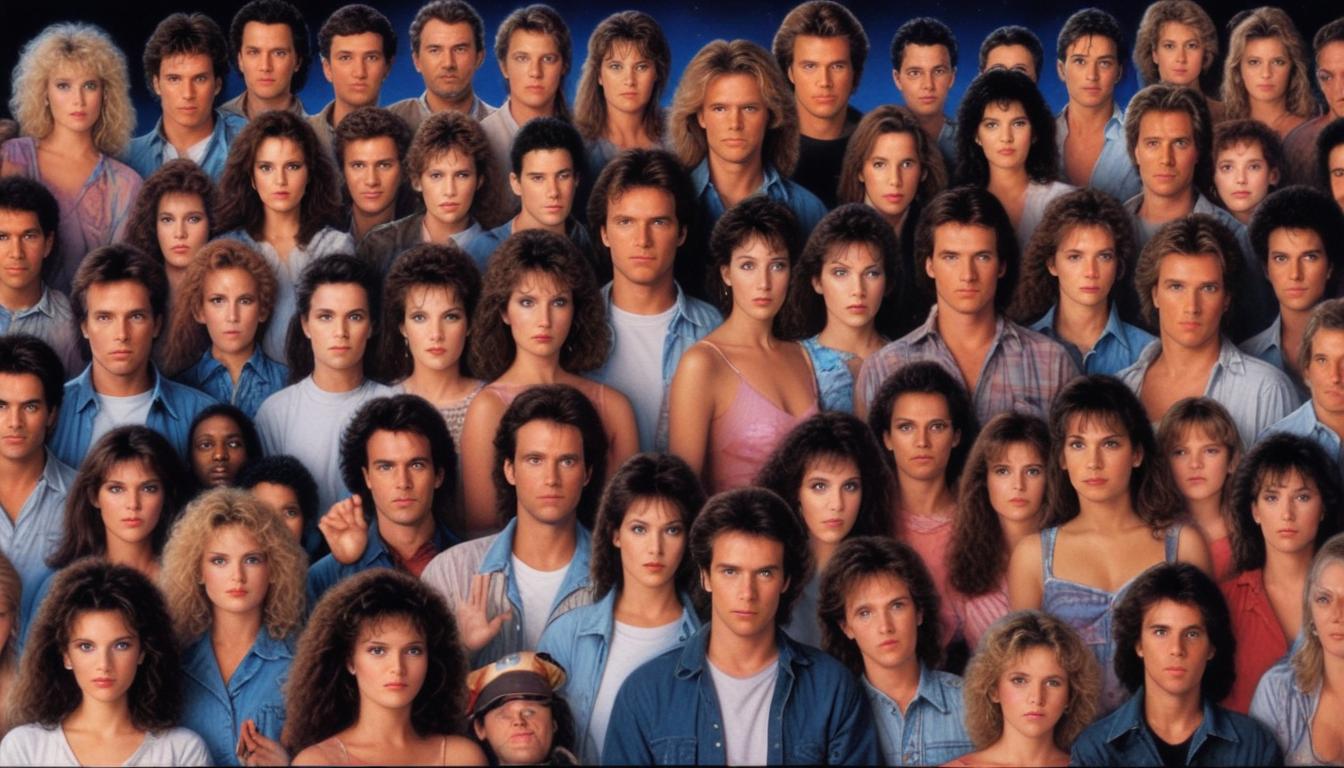
- defining the decade
- cult classics that endured
- unforgettable performances
- groundbreaking special effects
- timeless soundtracks
The 1980s were a transformative era for cinema, giving birth to an array of films that became cultural benchmarks. These defining movies of the decade crystallized themes of adventure, coming-of-age tales, and imagination that resonated deeply with audiences of all ages. From blockbuster juggernauts to heartwarming comedies, 80s Films tapped into a shared sense of wonder and optimism that reflected the spirit of the times. Filmmakers embraced the fusion of bold storytelling and emerging technology, crafting works that not only entertained but also shaped the direction of modern cinema.
Iconic titles like “E.T. the Extra-Terrestrial” and “Back to the Future” perfectly encapsulated the zeitgeist, blending heartfelt emotion with groundbreaking creativity. These 1980s Cinema Classics served as more than just big-screen escapism—they became shared cultural experiences that defined a generation. They weren’t afraid to reach for the stars, whether through mind-bending science fiction or magical realism, weaving unforgettable narratives that continue to inspire filmmakers today. Movies like these became time capsules, preserving the hopes, fears, and dreams of the decade for future audiences to discover.
The 80s also marked a pivotal moment for teen-centered storytelling, with films like “The Breakfast Club” and “Ferris Bueller’s Day Off” exploring relatable themes of identity, rebellion, and belonging. These stories, grounded in reality yet carried by a fresh sense of humor and charm, reminded viewers that Nostalgic Movies of this era weren’t merely forms of entertainment—they often provided a lens through which audiences examined their own lives. Whether through adventurous escapades or introspective journeys, these films taught us to embrace both the excitement and challenges of growing up.
Moreover, this decade captured societal shifts and anxieties, with Cold War tensions and technological advancements often subtly influencing cinematic narratives. Movies such as “WarGames” and “RoboCop” reflected concerns about artificial intelligence and the future, while still delivering thrilling experiences. These defining films embraced timely themes without compromising on mass appeal, enchanting audiences worldwide and cementing their legacy within pop culture. The 1980s was truly an extraordinary time where boundaries were pushed, and the art of storytelling reached new heights, leaving an indelible mark for decades to come.
cult classics that endured
While the 1980s introduced timeless blockbusters, it was also a decade that gave rise to a host of cult classics—films that might have started modestly but grew to achieve an almost mythic status among fans. These Nostalgic Movies were often quirky, bold, and unapologetically unique, providing viewers with stories and characters that lingered in the imagination long after the credits rolled. One such example is “The Goonies,” a feverishly adventurous tale of friendship, treasure hunting, and booby-trapped caves that encapsulated the kind of youthful thrill that 80s Films excelled at delivering. It became more than just an adventure; it was the ultimate embodiment of childhood imagination, offering a story filled with hilarity, peril, and heroism.
Similarly, “Blade Runner,” Ridley Scott’s neo-noir masterpiece, initially struggled to connect with audiences but has since become a cornerstone of science fiction cinema. This 1980s Cinema Classic not only invited audiences into a visually unforgettable dystopian world but also asked profound philosophical questions about identity, morality, and what it truly means to be human. Its unique aesthetic, mesmerizing atmosphere, and haunting soundtrack served as the perfect backdrop to explore heavy existential themes, making the film iconic even decades later and igniting heated discussions on its deep symbolism.
Another cult gem to emerge from the 80s is “The Princess Bride.” Blending fantasy, romance, and comedy with memorable lines and irresistible charm, it became a film that defied genres. What might have initially seemed like a niche tale of swords and sorcery soon revealed itself as a lovingly crafted story filled with wit, heart, and unforgettable characters like Westley, Buttercup, and Inigo Montoya. “The Princess Bride” is the kind of film that leaves audiences grinning every time they remember it, continuing to resonate with fans across multiple generations.
“Big Trouble in Little China” marked another standout entry in 80s Films, mixing martial arts, mythology, and unapologetic camp in a way that felt entirely fresh and unconventional. Kurt Russell’s performance as the brash yet hilariously inept hero Jack Burton brought an irresistible energy to this wild, action-packed ride. Despite its initial underperformance, it became a beloved cult phenomenon, celebrated for its eccentric plot and playful homage to pulp adventure stories.
The beauty of these cult classics lies in their ability to foster passionate followings over time, often transcending their original reception. Films like “Heathers”—a darkly comedic exploration of high school politics and social hierarchies—challenged the clichés of the teen drama genre, offering sharp, satirical commentary that remains disturbingly relevant today. Meanwhile, “The Evil Dead,” Sam Raimi’s low-budget horror-comedy, redefined what could be achieved in the genre with minimal resources, delivering an infectiously creative experience that spawned a loyal fanbase and numerous sequels.
These movies didn’t necessarily follow the typical Hollywood formulas of the time, which is perhaps why they endured in a different, deeply impactful way. Cult classics from this decade succeeded because they dared to be daring, often catering to niche audiences but ultimately expanding well beyond those confines. What connects them all is their ability to transport viewers to bold new worlds or capture wildly original tones, cementing their place among the most memorable Nostalgic Movies of the 80s.
unforgettable performances
The 1980s were a golden era for on-screen performances that transcended the boundaries of spectacle to deliver deeply memorable and often career-defining portrayals. The decade showcased a blend of seasoned acting legends and rising stars who brought characters to life in ways that felt authentic, timeless, and utterly magnetic. Among these unforgettable performances, few shone as brightly as Jack Nicholson’s chilling turn as Jack Torrance in “The Shining.” Nicholson’s descent into madness remains one of the most haunting and celebrated portrayals in horror history, cementing his place as one of the greatest actors of his generation. His ability to oscillate between reserved tension and explosive intensity perfectly encapsulated the terror and claustrophobia of Stanley Kubrick’s masterpiece, making it a cornerstone of 1980s Cinema Classics.
On the lighter side of the spectrum, we find the irresistibly lovable charm of Michael J. Fox in “Back to the Future.” As Marty McFly, Fox effortlessly captured the relatability and wit of an average teenager swept up in extraordinary circumstances. His dynamic chemistry with Christopher Lloyd’s eccentric Doc Brown elevated the film from a mere sci-fi adventure to a globally cherished phenomenon. The infectious energy Fox brought to one of the most Nostalgic Movies of the era continues to inspire pop culture decades later, with Marty McFly remaining a character who feels fresh and appealing to new generations of fans.
Another unforgettable actor pairing from the decade was Harrison Ford’s dual triumph as two iconic characters: Indiana Jones and Han Solo. His rugged charisma and dry humor turned both roles into cultural touchstones and firmly established Ford as a cinematic juggernaut of the 80s. Whether navigating ancient booby traps in search of legendary artifacts or piloting the Millennium Falcon through intergalactic battles, Ford imbued these roles with a balance of sheer heroism and human vulnerability, elevating them beyond mere action-hero archetypes into enduring icons of 80s Films.
One cannot pass over the intense magnetism of Sigourney Weaver’s performance as Ellen Ripley in “Aliens.” Weaver redefined the concept of the action heroine with a fearless, multidimensional portrayal that blended strength, intelligence, and maternal instinct. Ripley’s journey from reluctant survivor in the first film to a full-fledged warrior in James Cameron’s sequel epitomized empowerment and garnered Weaver an Oscar nomination—an unheard-of accomplishment for a sci-fi film at the time. To this day, Ripley stands as a groundbreaking character in cinema and a testament to the transformative power of an unforgettable performance.
Of course, the 80s weren’t only defined by larger-than-life action and adventure performances. Dustin Hoffman in “Rain Man” gave one of the most soul-stirring portrayals of the decade as the autistic savant Raymond Babbitt. Hoffman’s meticulous attention to detail and nuanced portrayal created an emotionally rich and respectful depiction that resonated with audiences. His work in the film not only resulted in widespread acclaim, including an Academy Award for Best Actor, but also helped broaden society’s awareness of autism. Likewise, Meryl Streep delivered a heart-wrenching turn in “Sophie’s Choice,” a performance so raw and heartbreaking that it remains a benchmark of dramatic acting. Streep’s portrayal of a Holocaust survivor grappling with unfathomable guilt and loss was a masterclass in emotional depth and resilience, earning her an Oscar and solidifying the film as one of the most lauded dramas of the 1980s Cinema Classics.
These unforgettable performances often reflected the era’s knack for creating characters who felt larger than life yet deeply relatable. Take Whoopi Goldberg’s breakout role in “The Color Purple.” As Celie, Goldberg transformed pain into triumph in a performance both subtle and devastating, earning her widespread acclaim and an Oscar nomination in her film debut. Meanwhile, Tom Cruise catapulted into stardom with his irresistibly cocky yet vulnerable portrayal of Maverick in “Top Gun.” His charisma and on-screen confidence turned the character into one of the most recognizable symbols of the decade, making both the film and Cruise synonymous with the era.
With such breathtaking performances, the 80s proved that compelling characters and powerful acting were just as integral to a film’s success as explosive action scenes or dazzling special effects. These actors brought depth, emotion, and unforgettable energy to their roles, creating stories and characters that continue to resonate in today’s cinematic landscape. Their artistry elevated 80s Films into more than just Nostalgic Movies—these legendary performances remain central to the legacy of 1980s Cinema Classics and serve as a testament to the talent that defined the era.
groundbreaking special effects
The 1980s heralded a new era of innovation in special effects, forever changing the way stories were told on the big screen. Filmmakers leveraged groundbreaking technology to transport audiences to places they had never imagined, blurring the lines between reality and cinematic fantasy. These advancements not only elevated the visual impact of 80s Films but also became integral to their status as timeless pieces of cinema. One of the most iconic examples of these achievements is “Tron.” While it received mixed reactions upon release, “Tron” pushed the envelope with its revolutionary use of computer-generated imagery (CGI). The film’s neon-drenched, digital frontier was unlike anything ever seen before, laying the groundwork for the future of CGI in Hollywood. It was a bold experiment that showed how technology could be harnessed to create entire worlds, making it one of the most forward-thinking Nostalgic Movies of its time.
Another landmark moment in 1980s Cinema Classics came with James Cameron’s “The Terminator.” While the film’s modest budget required resourcefulness, Cameron’s collaboration with special effects wizard Stan Winston resulted in the creation of the menacing T-800 cyborg. The practical effects used to bring Arnold Schwarzenegger’s futuristic assassin to life delivered a visceral sense of realism, proving that innovation wasn’t always about cutting-edge computers. By the time Cameron returned with the sequel in the 1990s, the groundwork laid by this 80s classic made room for even more sophisticated effects, but the original remains a testament to the power of practical ingenuity.
Speaking of practical magic, Steven Spielberg’s “E.T. the Extra-Terrestrial” gave audiences one of the most beloved alien characters in cinema history. The animatronic E.T., crafted with meticulous attention to detail, felt alive in every sense of the word, evoking genuine emotion from viewers. The practical effects behind E.T.’s gestures, combined with Spielberg’s masterful storytelling, created a heartwarming tale that captured the wonder of the decade’s filmmaking ethos. It’s no wonder “E.T.” became a touchstone for 80s Films, embodying the kind of cinematic enchantment that has captivated generations of viewers.
Meanwhile, George Lucas and Industrial Light & Magic (ILM) raised the bar for visual effects with “The Empire Strikes Back.” Released in 1980, the second installment in the “Star Wars” saga introduced audiences to the surreal beauty of Cloud City, the haunting expanse of the ice planet Hoth, and highly realistic lightsaber duels that further solidified the saga’s spot in cinematic history. The team’s brilliant use of miniatures, stop-motion animation, and matte paintings added texture and depth to every frame, proving that effects could enhance a story’s emotional core rather than distract from it. The innovative techniques pioneered in this film represent some of the quintessential achievements of 1980s Cinema Classics.
No discussion of groundbreaking special effects would be complete without mentioning “Ghostbusters.” This supernatural comedy effectively melded humor with state-of-the-art effects, bringing Stay Puft Marshmallow Men and slimy green ghosts to life in ways that thrilled and terrified audiences in equal measure. Blending practical models with visual effects wizardry, the film struck the perfect balance of spectacle and storytelling, making it one of the most enduring Nostalgic Movies of the decade. Ray Parker Jr.’s infectious soundtrack and the larger-than-life personas of its stars only added to the magic, but it was the special effects that ensured “Ghostbusters” would remain a pop culture phenomenon for years to come.
John Carpenter’s “The Thing” pushed the horror genre to unimaginable heights, relying on jaw-dropping practical effects to craft its grotesque alien transformations. Rob Bottin’s groundbreaking creature designs turned every moment into a nightmare, leaving audiences both horrified and awestricken. The visceral nature of the effects heightened the sense of dread and paranoia, turning this sleeper hit into a celebrated classic. Decades later, “The Thing” is still hailed as a masterclass in practical effects, offering a stark reminder of what can be achieved without digital shortcuts.
Of course, we can’t forget “Who Framed Roger Rabbit,” a film that seamlessly merged live-action and animation with an artistry that had never been seen before. Robert Zemeckis and his team blended hand-drawn cartoon characters with real-world actors, creating a fully cohesive and vibrant universe where humans and toons interacted in stunningly believable ways. This risky but wildly successful combination of technology and artistry cemented the movie’s place among groundbreaking 80s Films, proving that innovation in visual effects could also redefine entire genres.
The advancements in special effects during the 80s not only ushered in an age of bold imagination but also inspired countless filmmakers to push the boundaries of what was possible. Whether through painstakingly crafted practical models, revolutionary uses of CGI, or inventive hybrids of old and new techniques, these films captivated audiences and redefined cinematic storytelling. For every fantastical creature, interstellar battle, or supernatural encounter, it was the innovation in effects that made these scenes unforgettable. Today, many of these 1980s Cinema Classics continue to stand as milestones in filmmaking, reminding audiences of a decade when the impossible became possible and the magic of movies reached new heights.
timeless soundtracks
When it comes to the 1980s, it wasn’t just the visuals or narratives that captured audiences—it was also the music. Timeless soundtracks became the beating hearts of many 80s Films, cementing their legacy as both cinematic and cultural phenomena. Recognizable within seconds, these soundtracks didn’t just complement the films; they elevated them, creating unforgettable moments that have stood the test of time. Whether through pulsating synth beats or heartfelt ballads, the music of this decade became inextricably linked with its movies, embedding these tunes in the memories of fans forever.
Few soundtracks encapsulate the spirit of the decade better than “Dirty Dancing.” The film’s iconic anthem, “(I’ve Had) The Time of My Life,” performed by Bill Medley and Jennifer Warnes, was so much more than a chart-topping hit—it was a defining anthem of romance and rebellion, much like the film itself. From the fiery chemistry of Baby and Johnny to the film’s climactic dance number, the soundtrack became the soul of the movie, making it one of the most beloved Nostalgic Movies of the era. Tracks like “Hungry Eyes” and “She’s Like the Wind” seamlessly blended contemporary pop with timeless sentiment, ensuring the soundtrack’s enduring appeal long after the film’s release.
Meanwhile, John Hughes’ penchant for crafting relatable coming-of-age tales was only matched by his ability to curate impeccable soundtracks, and “The Breakfast Club” is perhaps the most iconic example. Who could forget the moment Judd Nelson raised his fist in triumph to Simple Minds’ “Don’t You (Forget About Me)”? The song didn’t just become a pop hit—it became a symbol of teenage rebellion and self-discovery, defining the emotional core of one of the quintessential 1980s Cinema Classics. Hughes’ expert use of music underscored the alienation, angst, and camaraderie of the film’s characters, ensuring that both the movie and its soundtrack left a lasting impression.
In the realm of action and adventure, “Top Gun” delivered an adrenaline-fueled soundtrack that soared alongside its high-octane aerial dogfights. Songs like “Danger Zone” by Kenny Loggins and “Take My Breath Away” by Berlin captured the fiery emotions and raw excitement that permeated the film. Just hearing these tracks instantly brings back images of jet-fueled skies and Tom Cruise’s charming smirk as Maverick. The soundtrack became one of the most commercially successful of the decade, demonstrating the symbiotic relationship between iconic 80s Films and unforgettable music.
“Footloose” also danced its way into hearts and onto playlists worldwide with a soundtrack that celebrated freedom, self-expression, and defiance. With Kenny Loggins’ titular anthem leading the charge, audiences couldn’t help but tap their feet and connect with the infectious energy of the film. Beyond the title track, songs like “Let’s Hear It for the Boy” brought lighthearted fun, while “Almost Paradise” delivered emotional resonance. The music captured the joy and struggles of youth, making the soundtrack just as integral to the film’s success as its narrative.
Another standout in the realm of timeless soundtracks is “Flashdance,” a film powered by its bold visuals and electrifying music. Irene Cara’s “Flashdance… What a Feeling” became a motivational anthem, inspiring audiences to chase their dreams with passion and determination. It wasn’t just a song—it was a statement of empowerment, perfectly encapsulating the journey of the film’s protagonist. The soundtrack also delivered other hits like “Maniac,” a track that pulsated with the same raw energy that defined this 1980s Cinema Classic, making it a cultural touchstone of the decade.
Not to be outdone, the science fiction and fantasy genres also harnessed powerful soundscapes to enhance their storytelling. Consider “Blade Runner,” whose haunting and ethereal score by Vangelis perfectly mirrored the film’s dystopian landscape. The futuristic, synth-heavy compositions resonated deeply with audiences, adding layers of emotional gravitas to Ridley Scott’s visual masterpiece. Similarly, John Williams’ work for the “Star Wars” films of the decade, particularly “The Empire Strikes Back,” continued to define what a sweeping, orchestral score could accomplish. Themes like “The Imperial March” became not only synonymous with Darth Vader but also one of the most recognizable pieces of music ever composed for the big screen.
Even lighthearted comedies like “Ghostbusters” benefited from musical magic, with Ray Parker Jr.’s titular track becoming a sensation that transcended the film itself. The fun, infectious chorus—“Who you gonna call?”—still sparks smiles and waves of nostalgia at the mere mention, proving just how effectively the right song could embed itself into the cultural lexicon. Likewise, “Ferris Bueller’s Day Off” emphasized its carefree, rebellious tone with a memorable mix of tracks, including Yello’s quirky “Oh Yeah,” now forever associated with Ferrari joyrides and slow-motion escapes.
Finally, one cannot ignore Prince’s contribution to the decade’s musical identity with his soundtrack for “Purple Rain.” The film itself was a semi-autobiographical tale of artistry and ambition, but it was the music—led by the transcendent title track—that gave it an otherworldly allure. Songs like “When Doves Cry” and “Let’s Go Crazy” paired Prince’s raw talent with emotional intensity, turning the film into a vehicle for his genius and a definitive 1980s symbol of creative expression.
These soundtracks weren’t just background music—they became woven into the narratives and emotional core of the films themselves. From epic orchestral scores to synth-infused pop hits, the music of 80s Films amplified their impact, making these movies resonate with audiences on a deeper level. Listening to any of these tracks today can immediately transport fans back to a specific scene, rekindling memories of an era when music and cinema were inseparable. These timeless soundtracks stand as a testament to the unparalleled artistry of 1980s Cinema Classics, ensuring their melodies will endure for generations to come.
