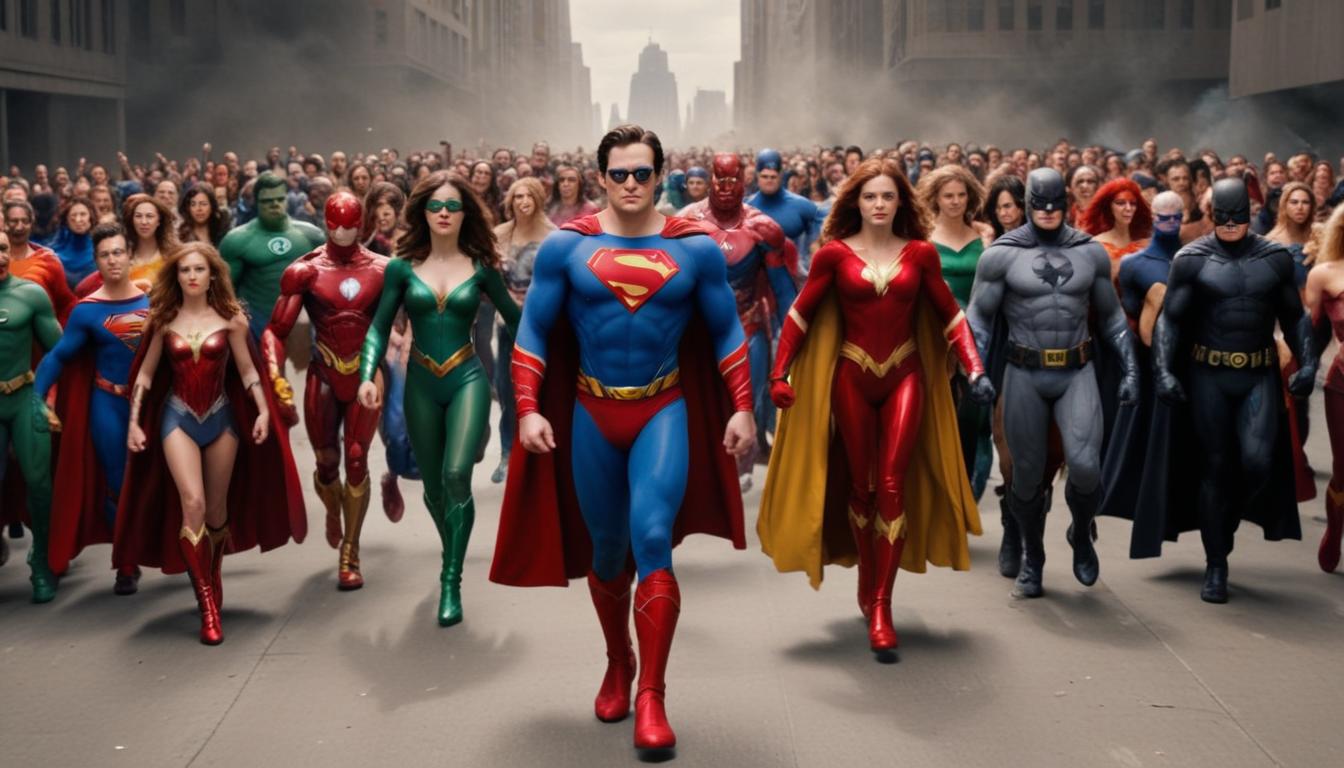
- defining the superhero genre
- iconic classics that shaped the genre
- groundbreaking performances
- modern cinematic universes
- underrated superhero gems
What makes superhero films so uniquely captivating is their near-universal appeal and the ability to tackle themes of power, responsibility, identity, and resilience. At its core, the superhero genre centers around individuals who possess extraordinary abilities—be it superhuman strength, advanced technology, or unwavering moral conviction—and their use of these gifts to protect society from threats that are often larger than life. Yet, defining the superhero genre isn’t as straightforward as caped crusaders battling evil masterminds; it encompasses a rich tapestry of complex characters and stories that push beyond the boundaries of conventional action-adventure.
The roots of superhero cinema can be traced to comic book lore, creating an inherent connection between the source material and its on-screen interpretation. The genre borrows heavily from mythological and literary archetypes of heroes with a “call to action.” Early films like the serialized adventures of Superman in the ’40s cemented a blueprint, but as the years passed, superhero films evolved to reflect societal change, addressing everything from patriotism to cultural diversity. This adaptability is crucial, as it allows Marvel Movies and DC Universe Cinema to consistently resonate with audiences across generations, creating a storytelling form that is both timeless and contemporary.
Another key aspect of the superhero genre is its fluidity in embracing subgenres, melding elements of science fiction, fantasy, drama, and even comedy. For instance, while Marvel Movies often employ humor to create a bond between their larger-than-life heroes and audiences (think Tony Stark’s wit or Peter Parker’s quips), films within DC Universe Cinema frequently lean into darker, brooding tones to explore the psychological weight of being a hero, as seen in “The Dark Knight” trilogy. This balance of stylistic diversity is what has kept the genre vibrant and wide-reaching.
Moreover, superhero films frequently act as mirrors reflecting cultural aspirations and fears. From grappling with issues of identity and belonging—so inherent in stories like the “X-Men” series—to exploring themes of accountability in an increasingly interconnected world as portrayed in “Captain America: Civil War,” these films transcend their action-packed exteriors to offer thoughtful commentary on the human condition. It’s no wonder, then, that they’ve cemented a place not only as blockbuster entertainment but as a meaningful cultural phenomenon.
iconic classics that shaped the genre
Few films hold the same cultural weight in the superhero genre as the iconic classics that laid its foundation. These landmark movies didn’t just pave the way for modern cinematic universes; they redefined what superhero films could achieve both narratively and cinematically. A standout example is Richard Donner’s “Superman” (1978), a groundbreaking film that captured the essence of hope and heroism in its titular character. With Christopher Reeve donning the cape, the film brought Superman out of comic books and onto the big screen as a fully realized figure—a hero you could believe in. The soaring John Williams score, combined with groundbreaking special effects for its time, set a gold standard for superhero films, proving they could be more than campy escapism; they could be inspiring and epic in scale.
Twelve years later, Tim Burton’s “Batman” (1989) brought an entirely new tone to the genre. With Michael Keaton as the Dark Knight and Jack Nicholson delivering an unforgettable portrayal of the Joker, the film showed that superhero stories could embrace a darker, more gothic aesthetic. Burton’s vision was a departure from the bright, optimistic tone of earlier superhero films, proving that these tales could delve into the psychological complexities of their characters. This exploration of dualities—Bruce Wayne’s private torment balanced against Batman’s public persona—became a template for the more introspective approach seen in later entries like “The Dark Knight.” Burton’s work firmly established that DC Universe Cinema could tackle weighty themes while still delivering blockbuster spectacle.
Marvel Movies, too, had their moment of evolution with Sam Raimi’s “Spider-Man” (2002). This film marked a turning point in the early 2000s, as it brought Peter Parker’s story to life with sincerity and heart. Tobey Maguire’s earnest portrayal of the wall-crawler explored personal sacrifice, the weight of responsibility, and the balance between ordinary life and extraordinary powers. For perhaps the first time, audiences witnessed a superhero grappling with truly relatable struggles, making the film a smash hit that reinvigorated interest in superhero cinema. Its success also set the stage for the eventual rise of the Marvel Cinematic Universe by proving audiences craved stories with deep character development alongside the action sequences.
Of course, no discussion of genre-defining classics would be complete without mention of “X-Men” (2000). Directed by Bryan Singer, this film introduced a new level of sophistication to superhero narratives. Delving into themes of discrimination and identity, it spotlighted characters like Wolverine, Professor X, and Magneto as flawed yet powerful figures navigating a divisive world. By blending action with meaningful social commentary, “X-Men” struck a chord with viewers and helped move the genre away from its previously cartoonish roots, ushering in a new era of thoughtful storytelling. It was a film that reminded audiences that superhero films could address real-world issues while still delivering thrilling action set pieces.
These iconic entries into superhero cinema didn’t just entertain—they shaped the framework upon which modern superhero films are built. They demonstrated that the genre could offer something for everyone: escapism, emotional resonance, dynamic characters, and larger-than-life action. The legacies of these movies endure, influencing everything from Marvel Movies’ approach to interconnected storytelling to DC Universe Cinema’s focus on layered, often darker narratives. They are, quite simply, the cornerstones of the superhero film landscape.
groundbreaking performances
Superhero films may rely on astonishing visuals and intense action to captivate audiences, but it’s often the performances of the actors that leave an indelible mark on the genre. Over the years, certain portrayals have transcended expectations, elevating comic book characters into layered, multi-dimensional figures brought to life on screen with incredible depth. These groundbreaking performances have not only shaped the legacy of individual movies but have also set a benchmark for what superhero storytelling can achieve.
Heath Ledger’s transformative performance as the Joker in Christopher Nolan’s “The Dark Knight” (2008) is arguably one of the most celebrated portrayals in cinema history, superhero-based or otherwise. Ledger’s haunting, anarchic take on Batman’s nemesis was as unpredictable and terrifying as it was tragic. His meticulous preparation, from developing the Joker’s mannerisms to writing in-character thoughts in a personal journal, resulted in a villain that felt unsettlingly real. Ledger’s work garnered widespread acclaim and earned him a posthumous Academy Award for Best Supporting Actor—one of the few moments in which superhero films received recognition from the Academy beyond technical categories. His performance elevated not only the “Dark Knight” trilogy but also the entire genre, proving that superheroes—and their foes—could be part of genuine artistic storytelling.
Not to be outdone, Robert Downey Jr.’s portrayal of Tony Stark/Iron Man in “Iron Man” (2008) reshaped what audiences expected from Marvel Movies and laid the foundation for the Marvel Cinematic Universe (MCU). Downey Jr.’s charismatic, snarky, and emotionally nuanced take made Tony Stark more than just a genius billionaire in a high-tech suit—he became the flawed yet endearing face of an entire franchise. Downey’s ability to balance humor with vulnerability allowed audiences to connect deeply with the character, setting a precedent for the human-centric storytelling approach of the Marvel Cinematic Universe. His performance turned Iron Man, historically a lesser-known superhero, into one of the most recognizable figures in pop culture, solidifying Marvel Movies’ dominance in the superhero genre.
DC Universe Cinema also found its iconic performances in Gal Gadot’s Wonder Woman, first introduced in “Batman v Superman: Dawn of Justice” (2016) before headlining her own film in “Wonder Woman” (2017). Gadot’s portrayal struck a perfect balance between strength, compassion, and moral integrity. As the Amazonian warrior princess, she brought a fresh perspective to the genre, showcasing a hero who was neither cynical nor disillusioned but driven by genuine hope and love for humanity. Her performance not only redefined Wonder Woman for a new generation but also became a cultural touchstone, inspiring a wave of empowerment and representation that extended well beyond the movie screen.
On the other end of the spectrum lies Hugh Jackman’s 17-year journey as Wolverine, culminating in the raw, emotional farewell of “Logan” (2017). Jackman’s deep embodiment of the grizzled mutant was equal parts fierce and melancholic, portraying a character whose violence was matched only by his inner turmoil. In “Logan,” Jackman delivered perhaps his most poignant performance yet, diving into the vulnerability and fragility of a hero who once seemed indestructible. The film’s R-rating allowed Jackman the freedom to explore Wolverine’s darker edges, and the result was a moving, mature exploration of mortality and legacy that elevated superhero films to an entirely new level of narrative complexity.
Villainous roles also deserve their share of recognition, and Michael B. Jordan’s Erik Killmonger in “Black Panther” (2018) is a prime example of a performance that added unprecedented dimension to the antagonist archetype. Killmonger’s charisma and deep emotional scars made him a tragic figure, driven not by pure malice but by a wounded sense of justice. Jordan’s magnetic intensity gave the Marvel Cinematic Universe one of its most memorable villains, proving that the best adversaries are often reflections of the heroes themselves. His portrayal opened the door for more complicated, morally ambiguous antagonists in superhero films.
In every instance, these groundbreaking performances pushed beyond the expected tropes of superheroes versus villains. They brought humanity, complexity, and even vulnerability to characters who might otherwise feel two-dimensional. Whether appearing in Marvel Movies or DC Universe Cinema, these actors have set new standards, influencing both their respective franchises and the larger cinematic landscape. In doing so, they ensured that superhero films remain a dynamic and elevated form of storytelling that continues to resonate with audiences worldwide.
modern cinematic universes
The rise of modern cinematic universes has redefined the superhero genre, creating interconnected storytelling experiences that span multiple movies, characters, and narratives. Leading the charge is the Marvel Cinematic Universe (MCU), which began with “Iron Man” (2008) and transformed the concept of standalone superhero films into a sprawling, cohesive epic. By introducing audiences to the genius billionaire Tony Stark and gradually expanding into cosmic, magical, and multiversal territories, Marvel Movies established a seamless blending of character arcs and overarching plots that culminated in massive events like “Avengers: Endgame” (2019). This approach not only rewarded longtime fans but also created an unprecedented sense of immersion in the genre, where each film became a chapter in a larger, unfolding saga.
Among the many cornerstones of the MCU’s success is its ability to strike a perfect balance between humor, heart, and spectacle. Films like “Guardians of the Galaxy” (2014) proved that superhero movies could experiment with tone and genre, infusing irreverent comedy into cosmic adventures. On the other hand, entries like “Black Panther” (2018) explored deeper cultural themes, addressing issues of heritage, geopolitics, and identity while still delivering visually dazzling set pieces. This versatility has allowed Marvel Movies to resonate with diverse audiences, setting a new standard for the genre. The interconnectedness of the MCU means that stakes feel larger and more personal as audiences follow characters across multiple adventures, further solidifying its dominance in the cinematic landscape.
The success of interconnected storytelling isn’t exclusive to Marvel. The DC Extended Universe (DCEU) sought to carve its own niche by embracing darker tones and unique narratives in its cinematic offerings. Films like “Man of Steel” (2013) and “Batman v Superman: Dawn of Justice” (2016) introduced audiences to a universe where gods walk among mortals, exploring themes of power, morality, and trust. While the DCEU has faced its share of challenges, its influence is undeniable, particularly with standout films like “Wonder Woman” (2017) and “Aquaman” (2018), both of which focused on character-driven stories while leaning into wonder and spectacle. These entries showcased DC Universe Cinema’s potential to craft emotionally resonant films within the superhero genre, balancing epic battles with grounded, humanizing moments.
Another pivotal addition to the modern cinematic universe model is “Zack Snyder’s Justice League” (2021), a film that reframed the DCEU’s approach by fleshing out its heroes and their collective mission. Unlike Marvel’s interconnected format, Snyder’s vision presented a more auteur-driven take on superheroes, diving into their trauma, motivations, and higher callings. This film set a benchmark for how DC Universe Cinema could differentiate itself from Marvel Movies by delivering stories with heavier thematic weight and visually distinctive styles. Despite some missteps, these efforts reflect DC’s ongoing journey to find its unique voice within the broader landscape of superhero films.
Even beyond Marvel Movies and DC Universe Cinema, other cinematic universes have emerged, honoring the allure of interconnected storytelling. Sony’s Spider-Man Universe, which includes films like “Venom” (2018) and “Spider-Man: Into the Spider-Verse” (2018), has demonstrated that different approaches to characters and worlds can further expand audience interest in the superhero genre. “Into the Spider-Verse,” in particular, is a groundbreaking achievement, blending stunning animation with a multiversal concept that resonated with both comic book enthusiasts and newcomers alike. Its innovative use of visual design and heartfelt storytelling has left an indelible mark on how cinematic universes can explore creative freedom while maintaining emotional core narratives.
Ultimately, the appeal of modern cinematic universes lies in their ability to weave intricate tapestries of storytelling, offering audiences not just isolated tales of heroism but immersive worlds brimming with connection and potential. As Marvel Movies continue to push forward with phases tied to multiversal madness and as DC Universe Cinema refines its strategies under evolving creative leadership, the genre shows no signs of slowing down. These interconnected universes have not only shaped how superhero films are made but also how they are experienced, cementing their role as a transformative force in contemporary cinema.
underrated superhero gems
For every blockbuster smash hit that defines superhero films, there are hidden gems within the genre that don’t always get the love and recognition they deserve. These films, while perhaps lacking the massive budgets or cultural ubiquity of Marvel Movies and DC Universe Cinema, manage to leave a lasting impression with their inventive storytelling, fresh takes on familiar tropes, or deeply personal narratives. Whether they’ve been overlooked due to limited marketing or misjudged upon release, these underrated works often highlight the vast potential of superhero cinema to explore unconventional paths.
One such example is “Chronicle” (2012), a found-footage take on the superhero origin story. Director Josh Trank focuses on three teenagers who stumble upon telekinetic powers, using the raw, shaky-cam aesthetic to deliver a grounded and haunting exploration of power and morality. The film’s character-driven narrative, paired with its minimalist yet effective special effects, creates a gripping story about friendship, betrayal, and the darker side of becoming exceptional. Without a traditional cape or costume in sight, “Chronicle” subverts superhero film norms in a way that feels fresh and intimate, making it a standout in the genre despite being minimally discussed in mainstream conversations.
Similarly, “Unbreakable” (2000) by M. Night Shyamalan is another masterfully understated superhero offering. With Bruce Willis as a seemingly ordinary man coming to terms with his incredible resilience and strength, and Samuel L. Jackson as his enigmatic foil, the film eschews flashy action scenes in favor of quiet tension and introspection. It’s less about saving the day and more about unearthing personal identity and purpose. Though it initially struggled to find its audience, “Unbreakable” gained a dedicated following over the years and eventually expanded into a trilogy with “Split” (2016) and “Glass” (2019). It’s now often hailed as one of the most unique interpretations of superhero storytelling, built on mood, character study, and subtle commentary on the nature of good versus evil.
“The Rocketeer” (1991) is another gem that deserves more recognition within the pantheon of superhero films. Directed by Joe Johnston, the film blends old-school adventure with the charm of a 1940s serial, telling the story of a young pilot who stumbles upon a jetpack that turns him into an unlikely hero. While its retro aesthetic and heartfelt tone may not have aligned with the gritty trends of modern superhero flicks, “The Rocketeer” remains a delightfully entertaining piece of cinema. Its lighthearted approach, witty performances, and emphasis on action-adventure over heavy special effects make it a refreshing departure from the well-trodden paths of the genre—one that sets the stage for modern nostalgia-driven hits.
Another criminally overlooked entry is “Sky High” (2005), an imaginative blend of high-school comedy and superhero action. Focusing on the students of a school designed specifically for the next generation of heroes and sidekicks, the film offers a clever, self-aware take on classic superhero archetypes. Its genuine humor and heart make “Sky High” a rare family-friendly entry to the genre that also doubles as a satire of its most familiar conventions. Despite receiving praise for its creativity and strong cast, the movie rarely gets its due alongside major Marvel Movies or DC Universe Cinema successes. Yet its narrative focus on growth, accepting one’s identity, and teamwork ensures it retains a loyal fanbase, especially among those seeking superhero films with a lighter touch.
On a grittier note, “Dredd” (2012) offers a hard-hitting, visually arresting adaptation of the Judge Dredd comics. Starring Karl Urban as the stoic, helmeted law enforcer, the film plunges viewers into the dystopian chaos of Mega-City One. With a pulsing synth soundtrack, brutal action sequences, and a tightly confined plot set within a massive tower block under siege, “Dredd” carves out its niche by fully embracing raw, visceral storytelling. While it lacked the commercial success of larger superhero franchises, the film is celebrated by fans and critics alike for staying true to its gritty, no-nonsense roots. It exemplifies how superhero films can thrive in darker, R-rated narratives without compromising depth or character design.
While many of these underrated gems may lack the cultural prestige of Marvel Movies or DC Universe Cinema blockbusters, their ingenuity, storytelling ambition, and willingness to take risks make them invaluable contributions to the genre. They serve as proof that superhero films can work on any scale, be it an intimate character study, a satirical comedy, or a stylistic action ride. For those willing to venture beyond the mainstream entries, these gems offer rich new perspectives on what it means to be a hero—and the kinds of extraordinary stories the genre is capable of telling.
